Get free quotes from mobile imaging near you
Takes about a minute. Free, no obligation; providers reply to you directly.
My father was discharged from a skilled nursing facility three years ago after a hip replacement. Two days in, the nurses thought he might have aspirated something. The on-call physician wanted a chest X-ray — not in six hours, not tomorrow morning, right now. What followed was a two-hour ordeal involving a transport van, a harried outpatient imaging center, a wait room full of confused looks, and a bill that showed up weeks later. The image showed nothing. The transport nearly caused a fall.
Nobody told us there was a better way.
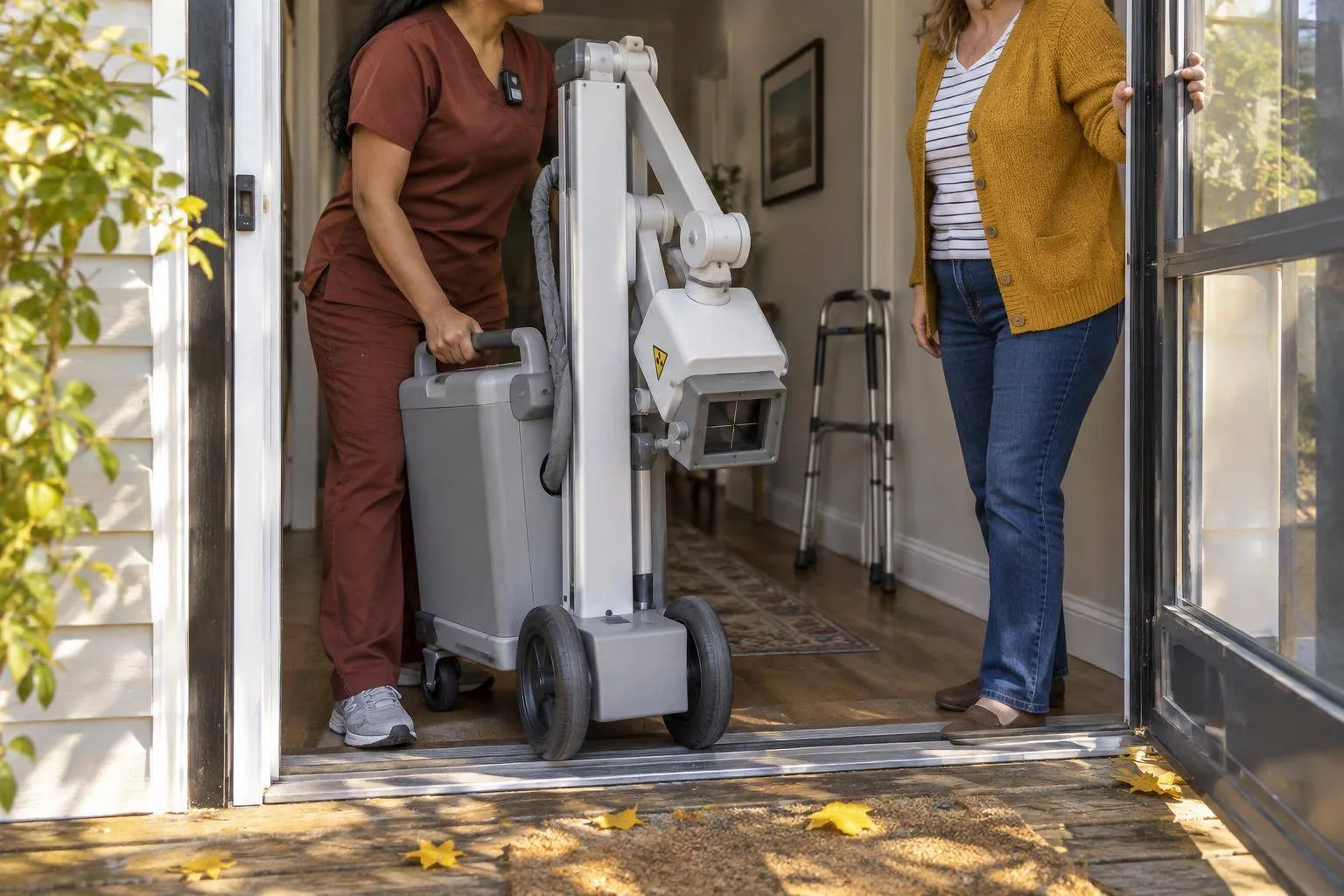
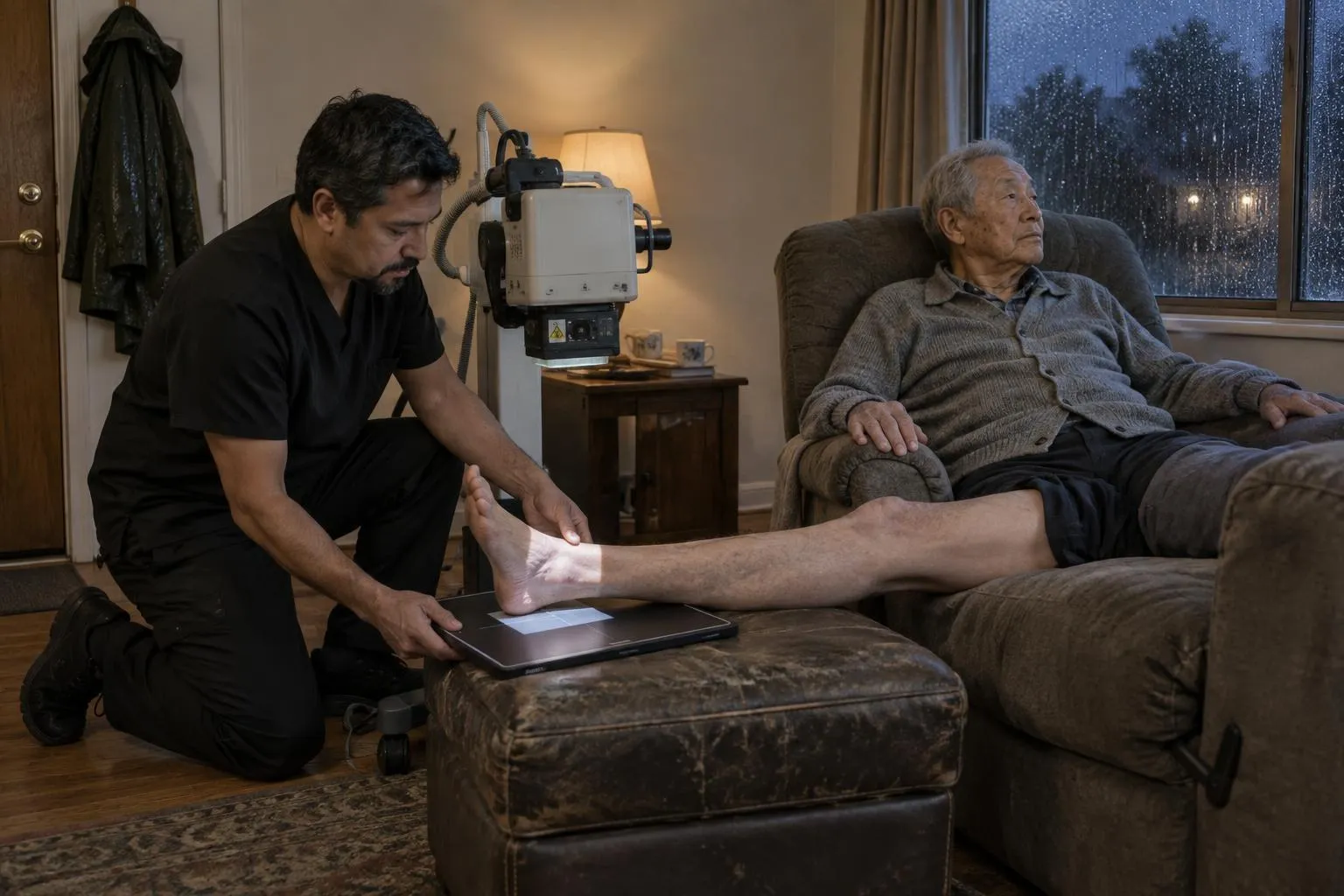
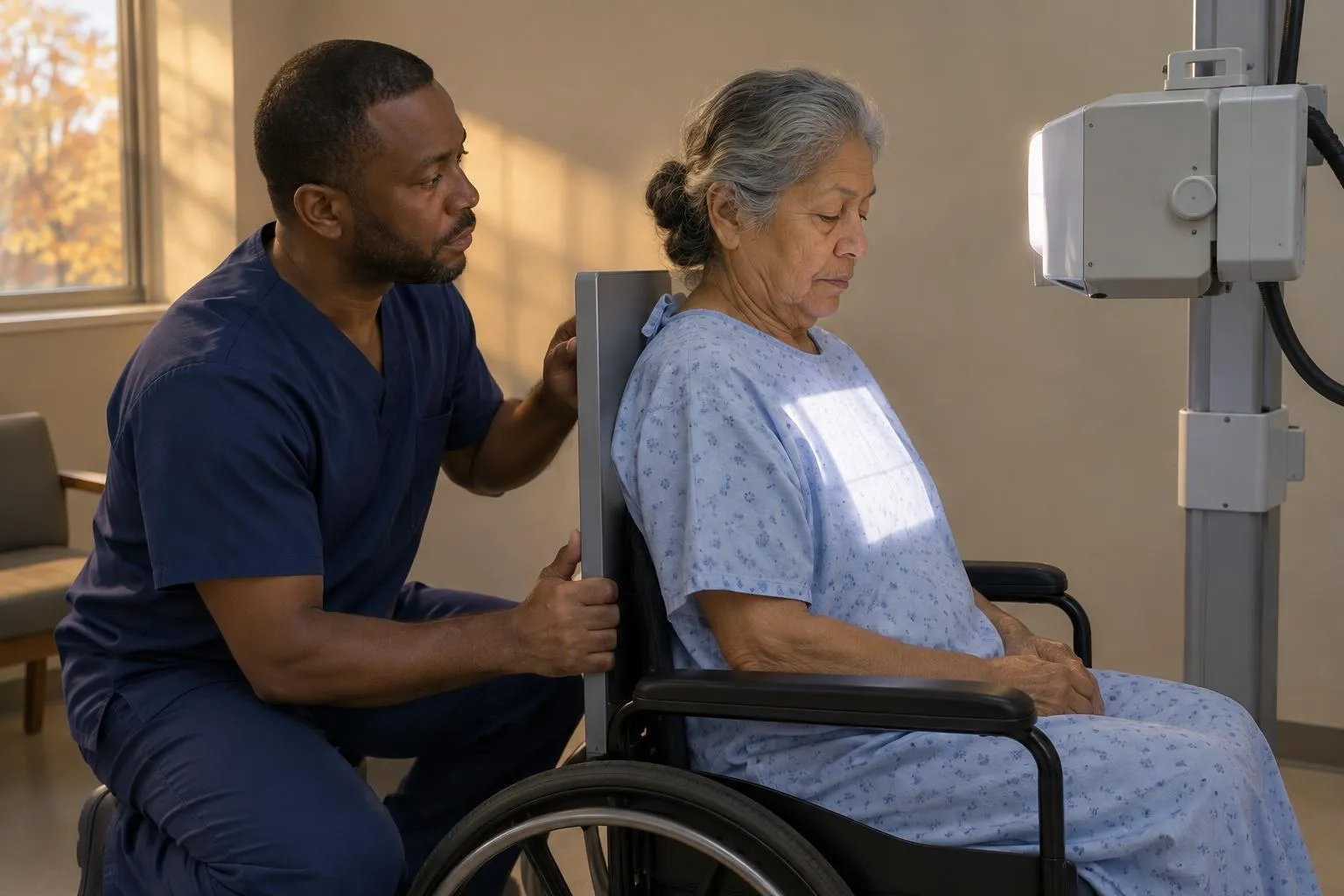
Mobile X-ray services exist precisely for that moment — the bedridden patient, the fragile elder, the hospice resident who shouldn’t be moved. A credentialed technologist shows up with a portable digital unit, takes the image bedside, transmits it electronically, and a radiologist reads it within hours. No transport. No wait room. No second trauma on top of the first.
Here’s the thing: most facility administrators, home health coordinators, and family caregivers have never heard of this option — or if they have, they don’t know how to evaluate a provider, what to expect from the workflow, or what separates a solid operation from a sketchy one. That’s what this guide fixes.
The Short Version:Mobile X-ray brings ARRT-licensed technologists and portable digital imaging directly to SNFs, assisted living facilities, hospice settings, and private homes. They transmit images electronically to radiologists for rapid reporting — same-day results are standard. The workflow takes under 30 minutes per patient. For facilities with bedridden or high-fall-risk populations, it eliminates transport costs, paperwork, and clinical risk entirely.
Key Takeaways
- Mobile X-ray technologists must operate under a physician or licensed nonphysician practitioner’s order — no order, no exam
- The full workflow from arrival to transmitted image runs roughly 30 minutes; radiologist reports follow via PACS web viewer
- Equipment matters: battery-operated portables with large wheels handle nursing home corridors; lighter units like the AmRad Dragon are built for house calls
- California providers face Radiologic Health Branch (CDPH) inspections every three years on average; federal reimbursement seekers face additional inspections
What Mobile X-Ray Services Actually Do
The term “mobile X-ray” gets used loosely. I’ll tighten it up.
A mobile X-ray provider is a licensed imaging company that dispatches radiologic technologists — typically ARRT-certified — to locations where a fixed X-ray suite isn’t available or practical. They bring portable digital X-ray equipment, perform the examination on-site, and transmit the images electronically to a radiologist for interpretation. The radiologist’s report goes back to the ordering physician, usually via a PACS (Picture Archiving and Communication System) web viewer.
That’s the loop: order → dispatch → exam → transmit → read → report.
What they image: chest (pneumonia, effusion, aspiration), extremities (fractures, post-surgical hardware), pelvis, abdomen, and spine. Not everything — CT, MRI, and fluoroscopy are off the table for portable units. But for the most common acute imaging needs in a post-acute or home setting, mobile X-ray covers the majority.
Who orders them: state-licensed physicians, nurse practitioners, and physician assistants — whoever holds prescribing authority in your jurisdiction. The examination cannot legally proceed without that order. This matters operationally: facilities need a workflow for getting orders placed before the technologist arrives, not after.
The Workflow, Step by Step
Here’s what a mobile X-ray visit actually looks like, because nobody explains this clearly:
- Scheduling — Facility staff or a home health coordinator calls or submits a request online. Most providers offer same-day dispatch for stat orders.
- Dispatch — A technologist loads the portable unit and digital cassettes into a vehicle. Common units for facility rounds: GE Optima 220/240 (heavier, designed for hospital room-to-room use, handles bed and wheelchair patients). For house calls: AmRad Dragon (lighter, smaller generator, optimized for smaller anatomy).
- Arrival — The tech wheels the machine through corridors to the patient’s room. This is where equipment matters — large wheels (like the MinX-ray HF120’s design) aren’t a marketing detail, they’re a functional requirement for navigating real facility hallways.
- Exposure — The exam itself. Positioning, exposure, done. The actual acquisition takes 1–2 minutes per cassette after exposure.
- Processing — The tech returns cassettes to the vehicle, scans them in a CR reader (1–2 minutes per cassette), checks for retakes, and transmits the images.
- Reporting — A radiologist reviews the images via PACS web viewer and sends the report to the ordering physician.
Start to finish, a single-patient visit in a nursing home runs roughly 20–35 minutes. Multi-patient rounds at a facility can be batched efficiently.
Pro Tip:When evaluating a provider, ask specifically about their turnaround time from transmission to radiologist report. “Same-day” is standard. “Within two hours for stat orders” is excellent. Anything vaguer than that is a yellow flag.
Equipment: Why It Matters More Than You Think
Not all portable X-ray units are the same, and the differences aren’t just specs — they translate directly into image quality, workflow efficiency, and patient comfort.
| Equipment | Best For | Key Feature | Limitation |
|---|---|---|---|
| GE Optima 220/240 | Hospital/SNF room-to-room | High power output, DR panel compatible | Heavy — not ideal for house calls |
| MinX-ray HF120 | Nursing home rounds | Large wheels, ergonomic room-to-room design | Requires outlet access |
| SourceRay | Facility and vehicle-based use | Wheel design for vehicle maneuverability | Mid-range portability |
| AmRad Dragon | House calls, home settings | Ultralight, smaller generator | Lower power — limited to smaller anatomy |
The generator size is the critical trade-off. Larger generators produce higher-quality images for larger anatomy (chest, pelvis, spine) but weigh more and often require a power outlet. Smaller generators handle extremities and smaller patients well but may struggle with obese patients or dense anatomy.
Battery operation is increasingly important. Facilities with older wiring or inconsistent outlet placement can cause real workflow headaches. Battery-operated units eliminate that variable entirely.
DR (Digital Radiography) panel compatibility is the other factor worth asking about. DR panels produce images immediately — no cassette scanning step. CR (Computed Radiography) cassettes are older technology requiring that vehicle-based scanning step. DR is faster; CR is cheaper. Quality providers are increasingly moving to DR.
Regulations: What You Need to Know Without the Legal Degree
Mobile X-ray is regulated, and the specifics vary by state. Here’s the framework, with California as the reference case since it has some of the most detailed requirements.
Ordering authority: Examinations must be ordered by a state-licensed physician or nonphysician practitioner (NP, PA). No exceptions. The order must exist before the exam proceeds.
Equipment posting: All areas with permanently installed X-ray machines must post “Caution X-Ray” signs at entrances (California Title 17, Cal. Code Regs. sec. 30305(c)). Mobile units operated in facilities need to meet similar signage requirements during use.
Inspection cycles: California’s Radiologic Health Branch (CDPH) inspects mobile X-ray providers’ equipment every three years on average. Providers seeking federal reimbursement (Medicare/Medicaid) face additional inspection requirements.
Handheld X-ray units: These require specific exemptions through the local CDPH office — they’re not automatically covered under standard portable X-ray licensing.
PACS integration: Not a regulatory requirement everywhere, but operationally necessary for any serious provider. Prior images and reports need to be accessible to radiologists for context.
Reality Check:If a mobile X-ray provider can’t tell you their inspection history, their CDPH registration number (in California), or their radiologist’s credentialing details — that’s a problem. Licensing documentation should be instantly producible. If it takes more than 24 hours to get, walk away.
Who Actually Needs This (And Who’s Overpaying for Transport)
The core use case is bedridden or high-fall-risk patients in post-acute settings. Specifically:
Skilled nursing facilities are the primary market. SNF administrators deal with a constant tension between clinical urgency and transport logistics. A fall patient who might have a hip fracture, a resident with suspected pneumonia, a post-op patient with a possible pulmonary embolism — all of these generate chest or extremity X-ray orders. Transport to an outpatient imaging center means scheduling, a van, staff time, potential deterioration in transit, and a bill. Mobile X-ray eliminates all of that.
Assisted living and memory care facilities have similar needs with an added complexity: patients with dementia often become severely agitated by transport. Getting them into a van, navigating traffic, sitting in a waiting room — it’s traumatic for them and difficult for staff. Bedside imaging eliminates the trigger entirely.
Hospice settings prioritize comfort above all. Diagnostic transport directly contradicts that goal for most patients. Mobile X-ray fits naturally into palliative care workflows where the clinical question is “what’s causing this symptom and how do we manage it comfortably” rather than “how do we treat this aggressively.”
Private homes and concierge medicine are a smaller but growing segment. House call physician practices increasingly bundle mobile X-ray into their service packages — evening and weekend availability, hotel and workplace visits, integration with mobile doctor services. The AmRad Dragon’s lightweight design exists specifically for this use case.
Nobody tells you this: if your facility is regularly transporting stable (not critical) patients for X-rays, you’re almost certainly spending more than a mobile X-ray contract would cost — and generating more clinical risk in the process.
How to Evaluate a Provider
The questions that separate good providers from mediocre ones:
Technologist credentials: Are your techs ARRT-certified in radiography? What’s the supervision ratio?
Radiologist turnaround: Who reads your images? What’s their average turnaround for routine orders? For stat orders? Are they sub-specialty qualified for the reads you need?
PACS access: Can ordering physicians access images and reports through a web viewer? Can they access prior studies for comparison?
Equipment age and type: When was the portable unit last serviced? Is it CR or DR? Battery or outlet?
Licensing documentation: Can you provide your CDPH registration (or equivalent) and most recent inspection report today?
Billing model: Do you bill Medicare/Medicaid directly, or does the facility bear the billing burden? What’s the per-study rate structure?
Stat availability: What’s your response time for urgent orders? Do you cover nights and weekends?
Pro Tip:Ask for three SNF references you can call directly. Not testimonials — actual facilities with a director of nursing or DON you can speak with. Any provider worth contracting with will have them ready.
What This Costs (And What It Saves)
I’ll be honest: published pricing for mobile X-ray is nearly impossible to find, because most providers negotiate rates directly with facilities rather than posting fee schedules. Portable X-ray systems themselves run from budget (the AmRad Dragon’s smaller generator puts it at the low end of the portable market) to institutional-grade (GE Optima units run significantly higher).
What matters operationally is the math on transport alternatives. A round-trip medical transport for a nursing home patient to an outpatient imaging center typically runs $200–$400+ in direct costs, plus staff coordination time, plus the clinical risk premium of moving a frail patient. Mobile X-ray per-study rates for contracted facilities typically undercut that total cost meaningfully.
For facilities running 10+ studies per month, the ROI calculation almost always favors a mobile contract.
Where This Is Heading
DR panels are becoming standard, not premium — image quality is improving while acquisition time drops. Teleradiology networks mean faster turnaround times as radiologist capacity is no longer geographically constrained. Some providers are beginning to add mobile ultrasound and EKG to their service packages, turning a single-service contract into a full mobile diagnostics solution.
The underlying driver — aging population, pressure to reduce hospital readmissions, CMS reimbursement incentives tied to SNF quality metrics — isn’t going anywhere. Mobile imaging volume will grow. The question for facilities is whether to build that relationship now with a quality provider or scramble when the clinical need becomes acute.
Practical Bottom Line
If you’re a SNF administrator or home health director reading this, here’s your action list:
- Audit your last 90 days of transport orders. Identify every X-ray that required transport rather than bedside imaging. Multiply by your average transport cost. That’s your baseline.
- Request proposals from two to three licensed mobile X-ray providers in your area. Use the evaluation questions above. Verify credentials and references.
- Ask your medical director to review the ordering workflow. Mobile X-ray only works smoothly if the order process is streamlined — telehealth-enabled NPs, standing order protocols for common presentations, and clear stat escalation paths.
- Start with a pilot. Most providers will negotiate a trial period. Run it for 60 days, measure turnaround times and staff satisfaction, then formalize the contract.
For a deeper look at how individual procedures are billed and what facilities should expect from their mobile imaging contracts, see our complete guide to mobile X-ray services.
The technology is good. The clinical case is clear. The obstacle is almost always just inertia — someone hasn’t run the numbers yet, or doesn’t know the option exists. Now you do.
Done reading? Get quotes from mobile X-ray services near you.
Takes about a minute. Free, no obligation; providers reply to you directly.
Popular cities:
Nick built this directory to help SNF administrators and home health agencies find credentialed mobile imaging providers without wading through services that lack proper ARRT licensure or ACR accreditation — compliance gaps he uncovered when researching portable imaging options for a family member in long-term care.