Get free quotes from mobile imaging near you
Takes about a minute. Free, no obligation; providers reply to you directly.
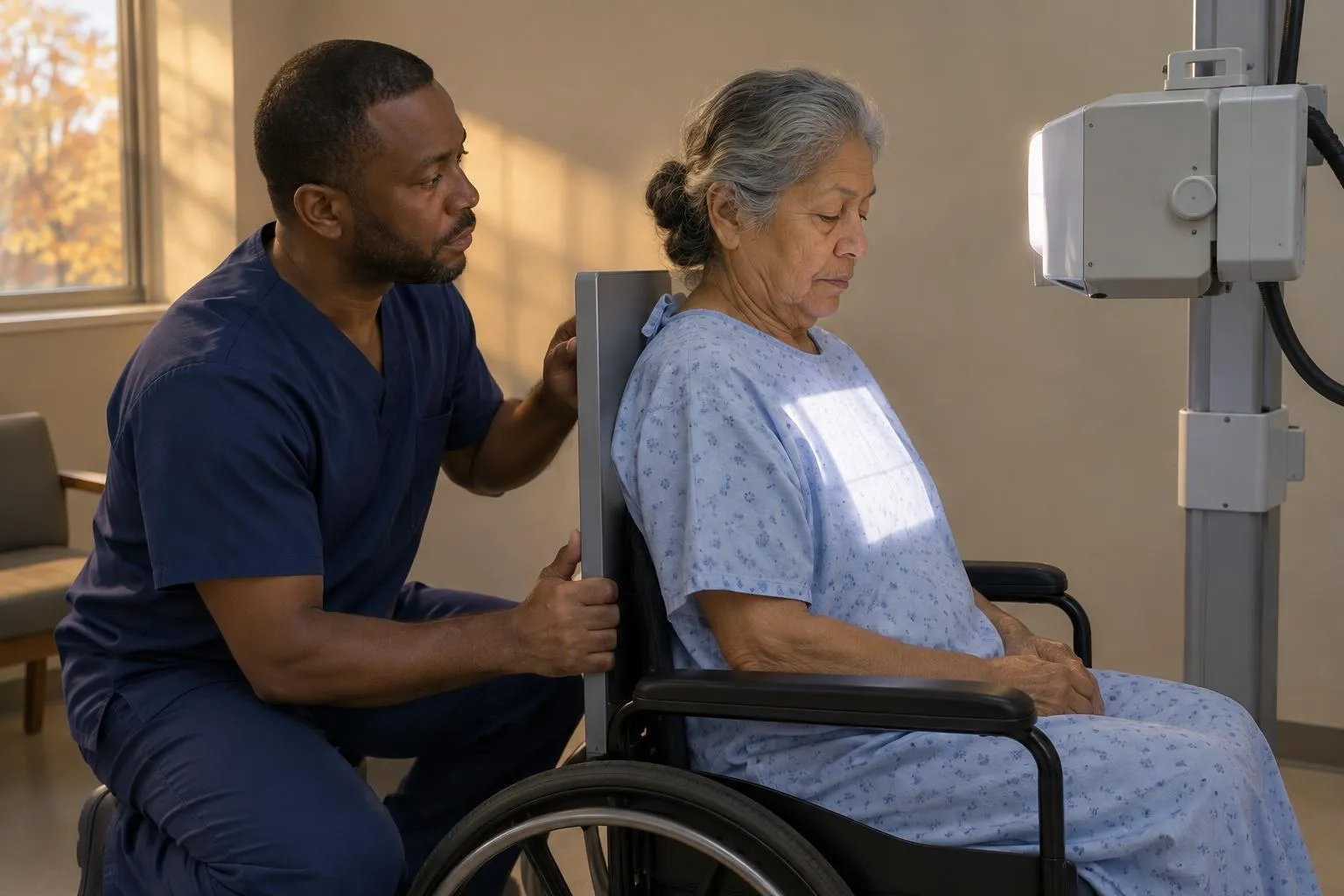
A facility administrator in Portland once told me she’d been sending residents to the hospital for routine chest X-rays for three years before she realized the mobile alternative existed. The bill? $3,300 per study, billed to Medicare, flagged for review, and creating a paperwork nightmare every single time. The mobile provider she eventually hired charged $200. Same diagnostic result. Zero transport risk for a 94-year-old with a hip fracture.
That’s a $3,100-per-study gap. And almost nobody talks about it clearly.
Most pricing guides for mobile X-ray services are written by equipment vendors trying to sell machines or teleradiology companies trying to lock in contracts. What you actually need — whether you’re an SNF administrator, a home health director, or a provider trying to price your services — is a clean breakdown of what things actually cost in 2026.
The Short Version:Mobile X-ray services typically run $75–$200 per study at the point of care, versus $500–$3,300 at a hospital. Equipment costs $40,000–$100,000; teleradiology reads add $12+ per study; and your biggest hidden cost is usually the after-hours premium you didn’t budget for.
Key Takeaways:
- Mobile X-ray is 50–85% cheaper than hospital-based imaging for the same diagnostic output
- Per-study pricing ($75–$200) is the standard model for facilities contracting mobile providers
- Equipment, teleradiology, and transport are the three cost layers — understand each separately
- After-hours and weekend rates can double your baseline cost; always ask about the tier structure
What Mobile X-Ray Actually Costs: The Three-Layer Model
Nobody tells you this, but mobile X-ray pricing has three completely distinct cost structures depending on who’s paying and what role you’re in.
Layer 1: Facility contracts (what SNFs and home health agencies pay)
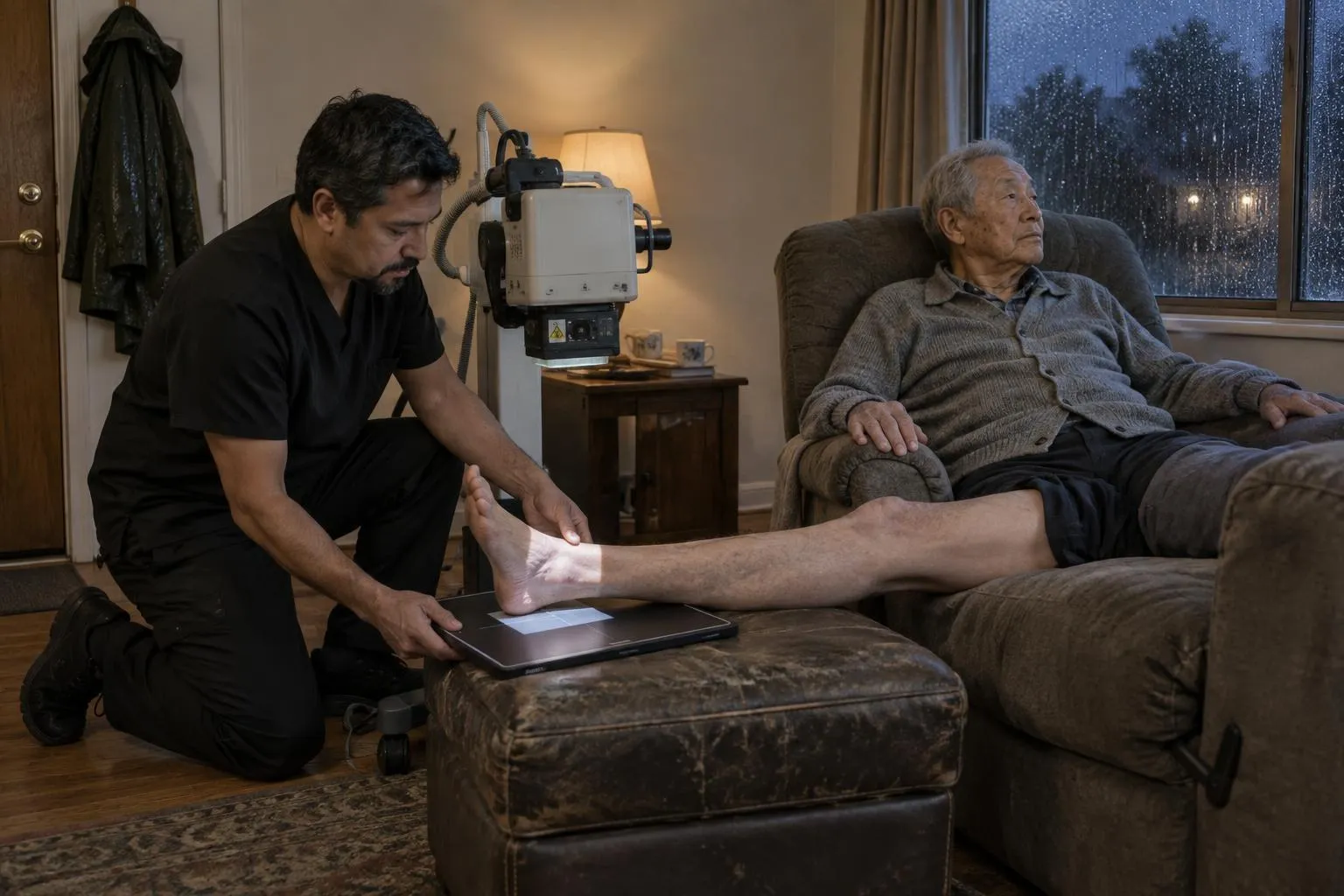
This is the most common scenario. A skilled nursing facility or assisted living community contracts with a mobile imaging provider on a per-study basis. Rates in 2026 run:
| Service Tier | Cost Range | What’s Included |
|---|---|---|
| Standard chest/extremity X-ray | $75–$120 | Technologist visit, portable digital X-ray, electronic image delivery |
| Specialized/multi-view studies | $120–$175 | Same as above + additional projections, longer tech time |
| After-hours or weekend study | $150–$225 | Standard study + time-of-day premium |
| Stat turnaround (<2 hours) | $175–$250 | Rush interpretation, priority scheduling |
| Ultrasound (mobile) | $200–$380 | Abdominal, vascular, or soft tissue; includes sono report |
| Hospital ER (comparison) | $500–$3,300 | Transport, facility fee, ED overhead, radiologist read |
The comparison column isn’t a typo. A chest X-ray that costs $200 from a mobile provider runs $3,300 in a Portland, OR hospital ER. That gap is real, documented, and the reason mobile imaging exists as an industry.
Layer 2: Equipment costs (what providers pay to operate)
If you’re on the provider side or evaluating a potential partner’s stability and equipment quality:
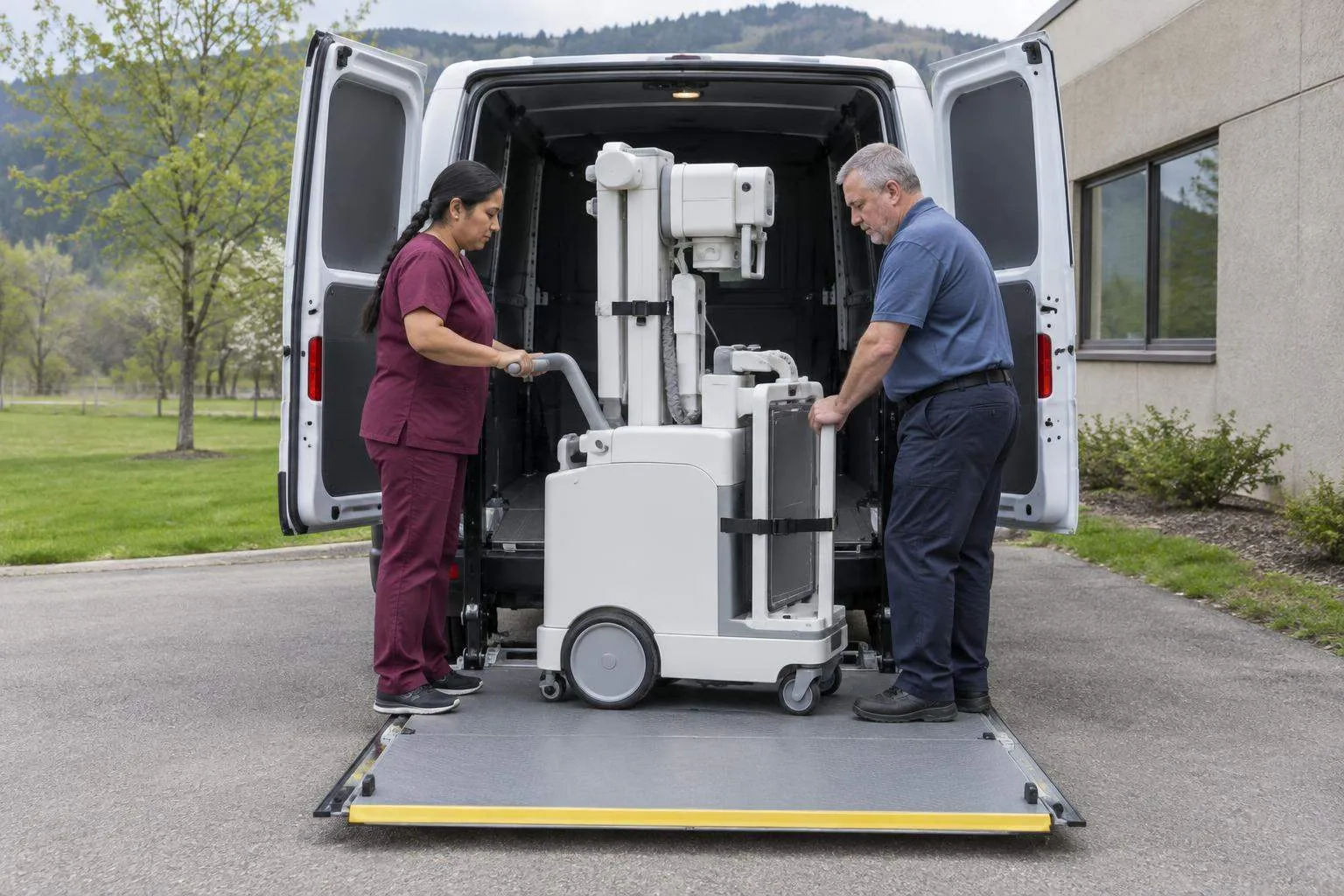
- Entry-level refurbished portable X-ray systems: $40,000–$45,000
- Intermediate systems (12–30 kW generators, 15–25 patients/day capacity): $45,000–$65,000 — this is the GE Optima 200 / Siemens Mira / Carestream DRX Revolution tier
- High-end systems: Up to $100,000
- Annual service contracts: 5–10% of machine price; roughly $1,000/year for entry-level, $5,000+ for high-end systems
Reality Check:A provider running a $60,000 refurbished machine on a $1,000/year service contract is cutting corners on maintenance. Ask any prospective mobile imaging partner what equipment they’re running and when it was last serviced. Equipment downtime is your downtime.
Layer 3: Teleradiology (the cost nobody explains upfront)
Every mobile X-ray needs a licensed radiologist to read and sign off on the image. That’s the teleradiology read, and it’s billed separately from the technical component (the technologist’s visit and image capture). In 2026:
- X-ray interpretations: $12+ per study (standard reads)
- MSK scans: $12 per study
- CT reads: $40 per study
- MRI reads: $60 per study
In practice, teleradiology can represent 120% of a mobile imaging service’s variable revenue allocation — meaning it’s the single largest operating cost. Providers who bundle teleradiology into their per-study rate are giving you a cleaner contract. Those who bill it separately can create invoice surprises.
What Drives Price Up (and How to Push Back)
Time of day. Providers like Desert Mobile Medical tier rates into working hours (Mon–Thu 8am–6pm, Fri 8am–3pm) and after-hours (everything else). After-hours studies routinely run 25–50% higher. If your facility generates predictable volume, negotiate a contracted day rate with a defined response window — you pay less, they get predictable scheduling.
Transport distance. Medicare’s HCPCS codes R0070 (≤20 miles) and R0075 (>20 miles) exist because transport cost is real. Providers typically pass distance costs through. The 2026 Medicare rates for these codes were updated with a 2.0% Ambulance Inflation Factor. If you’re more than 20 miles from the provider’s base, expect a line item.
Exam complexity. A two-view chest X-ray and a full spine series use the same machine but not the same time. Multi-projection studies take longer, require more post-processing, and justify higher per-study rates. Get a rate card that breaks out pricing by CPT code rather than accepting a single flat rate.
Pro Tip:Ask any mobile imaging provider for their complete CPT-level rate card before signing a contract. A single “per study” rate that doesn’t distinguish between a simple extremity X-ray and a complex abdominal series will cost you money over time.
Regional Price Variation
Mobile X-ray costs vary meaningfully by geography, driven by local labor rates, provider density, and cost of living. Urban markets — New York, Los Angeles, Chicago — tend to run 15–25% higher than midsize markets, both for provider contracts and for the hospital benchmarks you’re comparing against. (That $2,775 abdominal ultrasound comparison comes from NYC specifically.)
Rural markets often face limited provider availability, which can actually push mobile rates higher despite lower general cost-of-living, because providers are building transport time and distance premiums into their base rates. CMS conducts 5-year cost surveys specifically to address these geographic variations in Medicare reimbursement — which tells you the discrepancy is large enough that the federal government has a formal process for managing it.
Hidden Fees: The List Nobody Gives You
The per-study rate is the headline. Here’s what can show up underneath it:
- Minimum visit fees — some providers charge a flat call-out fee regardless of how many studies are ordered on a visit
- After-hours premiums — often not disclosed clearly in initial quotes
- Stat interpretation upcharges — teleradiology rush reads can add $25–$50 per study on top of standard interpretation
- Image storage/PACS fees — if you need images stored in a specific format or accessible via a portal
- Re-read fees — if a radiologist interpretation needs amendment or addendum
Practical Bottom Line
If you’re an SNF or home health administrator shopping for a mobile imaging partner: budget $100–$175 per standard study as your working assumption, ask explicitly about after-hours tiers, and get a full CPT-level rate card. Compare any quote against the $500–$3,300 you’re currently spending per ER transport — the math is rarely close.
If you’re evaluating a provider’s pricing legitimacy: an intermediate refurbished system in the $45,000–$65,000 range with a proper service contract and teleradiology reads at $12–$15 per X-ray study represents a credibly sustainable cost structure. Providers pricing below $75/study on standard studies are either cutting corners on equipment, skimping on teleradiology quality, or subsidizing volume with unsustainable margins.
The best mobile imaging relationships are built on transparency — providers who show you their rate structure clearly, explain their after-hours policy upfront, and can tell you exactly which teleradiology group is reading your studies.
For a broader look at how mobile imaging services work, what to look for in a provider, and how to evaluate quality — start with The Complete Guide to Mobile X-Ray Services.
Done reading? Get quotes from mobile X-ray services near you.
Takes about a minute. Free, no obligation; providers reply to you directly.
Popular cities:
Nick built this directory to help SNF administrators and home health agencies find credentialed mobile imaging providers without wading through services that lack proper ARRT licensure or ACR accreditation — compliance gaps he uncovered when researching portable imaging options for a family member in long-term care.