Get free quotes from mobile imaging near you
Takes about a minute. Free, no obligation; providers reply to you directly.
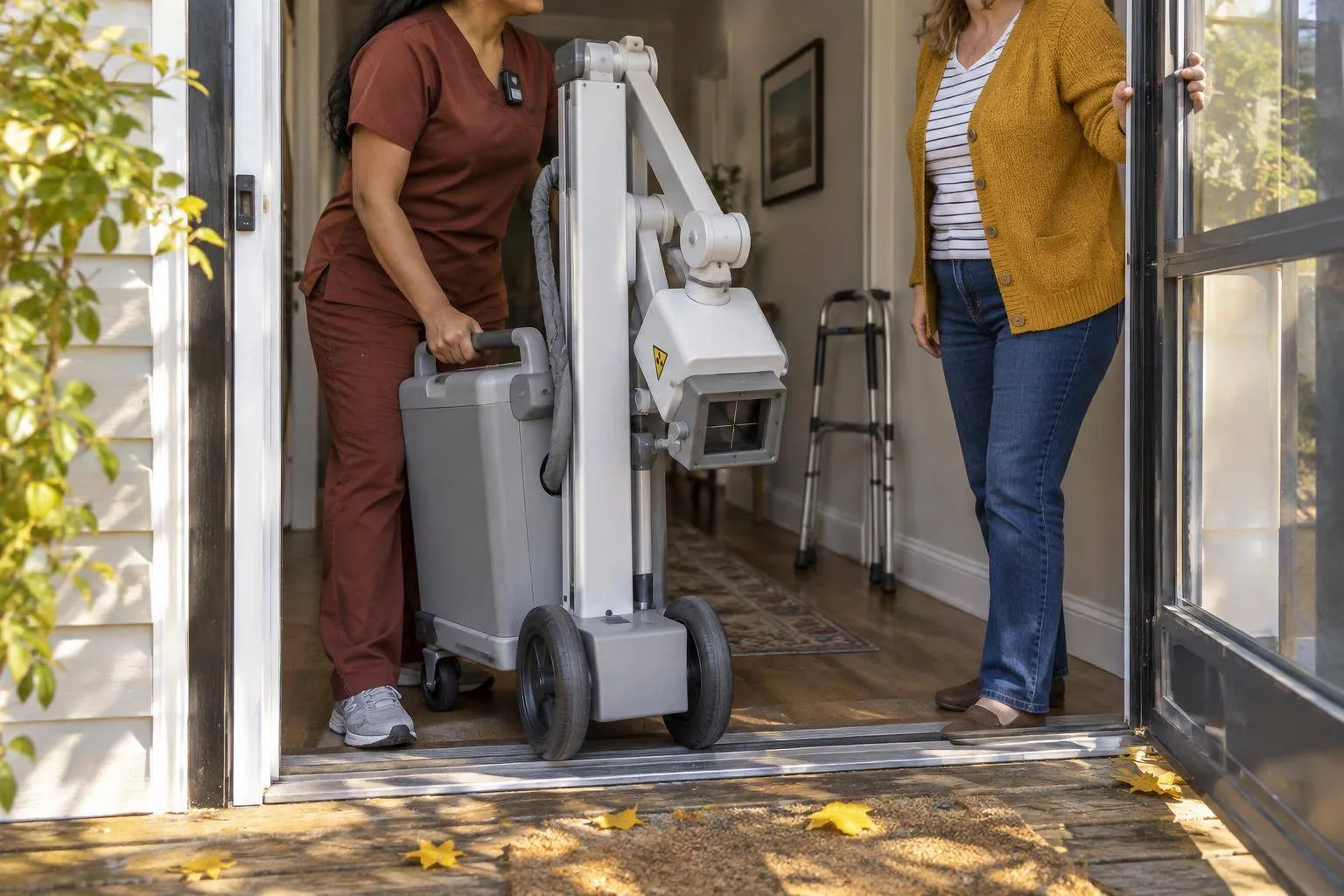
The first time I ordered a portable X-ray for a patient, I assumed it worked like a pizza delivery. You call, someone shows up with a machine, they take a picture, they leave. Twenty minutes, tops.
What actually arrived was a technologist who spent the first five minutes assessing the room layout, repositioning the bed, explaining the procedure to a confused 84-year-old, setting up lead barriers around two nurses who didn’t want to leave, adjusting exposure settings three times because the patient couldn’t hold still, then transmitting the images to a radiologist sixty miles away — all before I’d finished my coffee.
I had wildly underestimated what this actually involves.
The Short Version:A mobile X-ray service sends a credentialed technologist to your facility with portable digital imaging equipment. They handle everything from patient positioning to radiation safety to electronic image transmission. The whole process takes 15–45 minutes per patient depending on complexity. You don’t need to transport anyone anywhere.
Key Takeaways
- Mobile X-ray technologists are ARRT-licensed professionals operating clinical-grade portable equipment — not just “someone with a machine”
- The service covers the full imaging chain: positioning, exposure, processing, and electronic transmission to a radiologist
- Radiation safety management is built into every visit — temporary barriers, staff protocols, the works
- Two distinct service models exist: in-facility roaming units and contract dispatch services (they work very differently)
What’s Actually Happening, Step by Step
Here’s what most people miss: mobile X-ray isn’t a single moment. It’s a compressed version of everything that happens in a hospital radiology department, packed into a portable workflow.
Step 1: The booking. You (or your nursing staff) place an order — typically through a dispatch coordinator who logs the exam type, patient details, and urgency level. Stat orders get prioritized differently than routine morning rounds. The dispatcher assigns a technologist, often routing based on geography across a multi-facility region.
Step 2: Equipment transport. The technologist loads portable digital or computed radiography equipment into their vehicle and drives to your facility. Companies like MOBILEX USA and National Mobile X-Ray structure their technologists on 10- or 12-hour consecutive shifts, during which they’re covering multiple facilities in a geographic zone. Significant drive time between stops is part of the job.
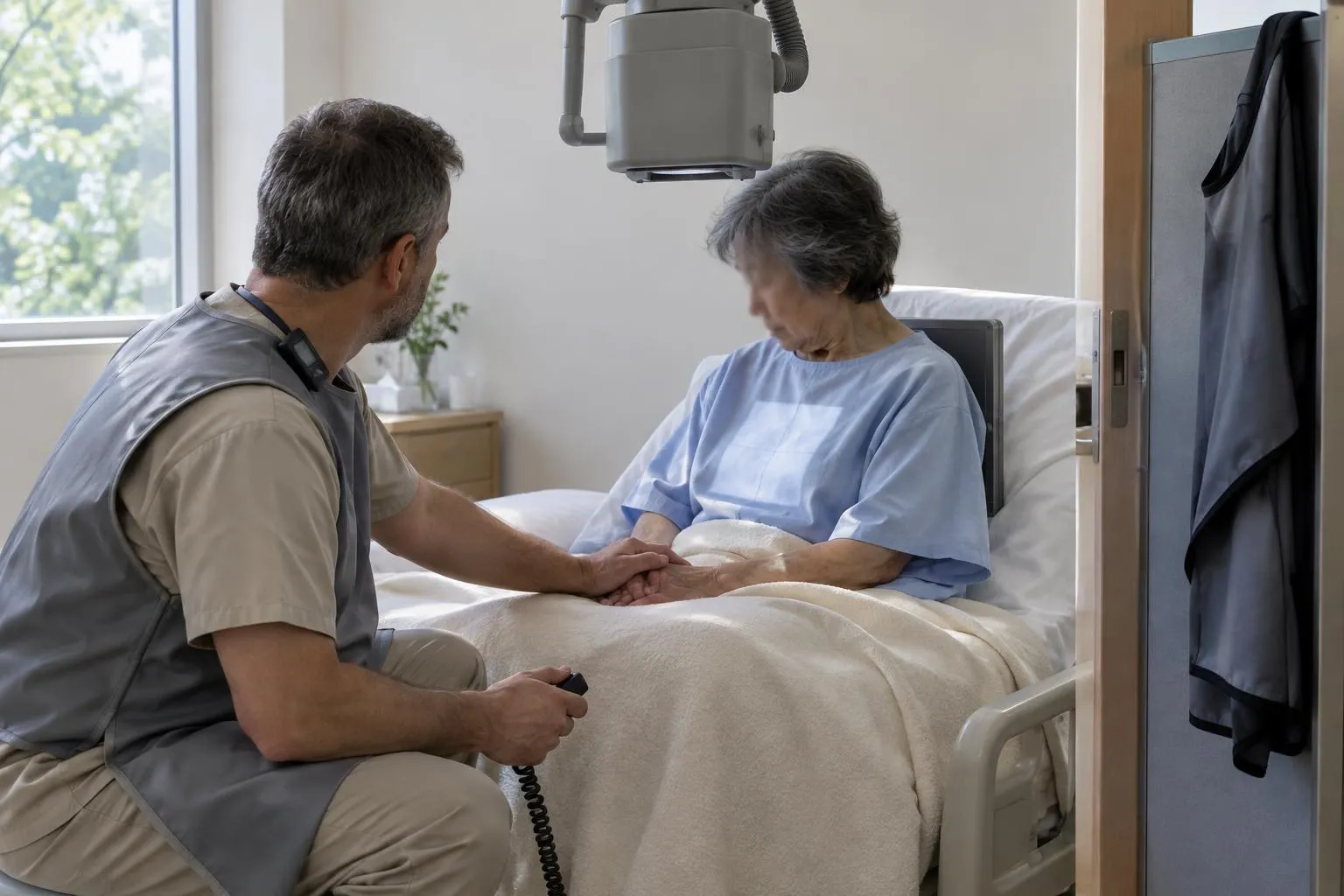
Step 3: Room setup. Nobody tells you this part happens at all. Before the tech takes a single image, they’re assessing the room: Where’s the equipment going? Who’s in adjacent beds? Are there staff nearby who need to step back or be shielded? Portable lead barriers get positioned to contain X-ray scatter. This isn’t optional — it’s radiation safety management, and it protects your nurses as much as your patients.
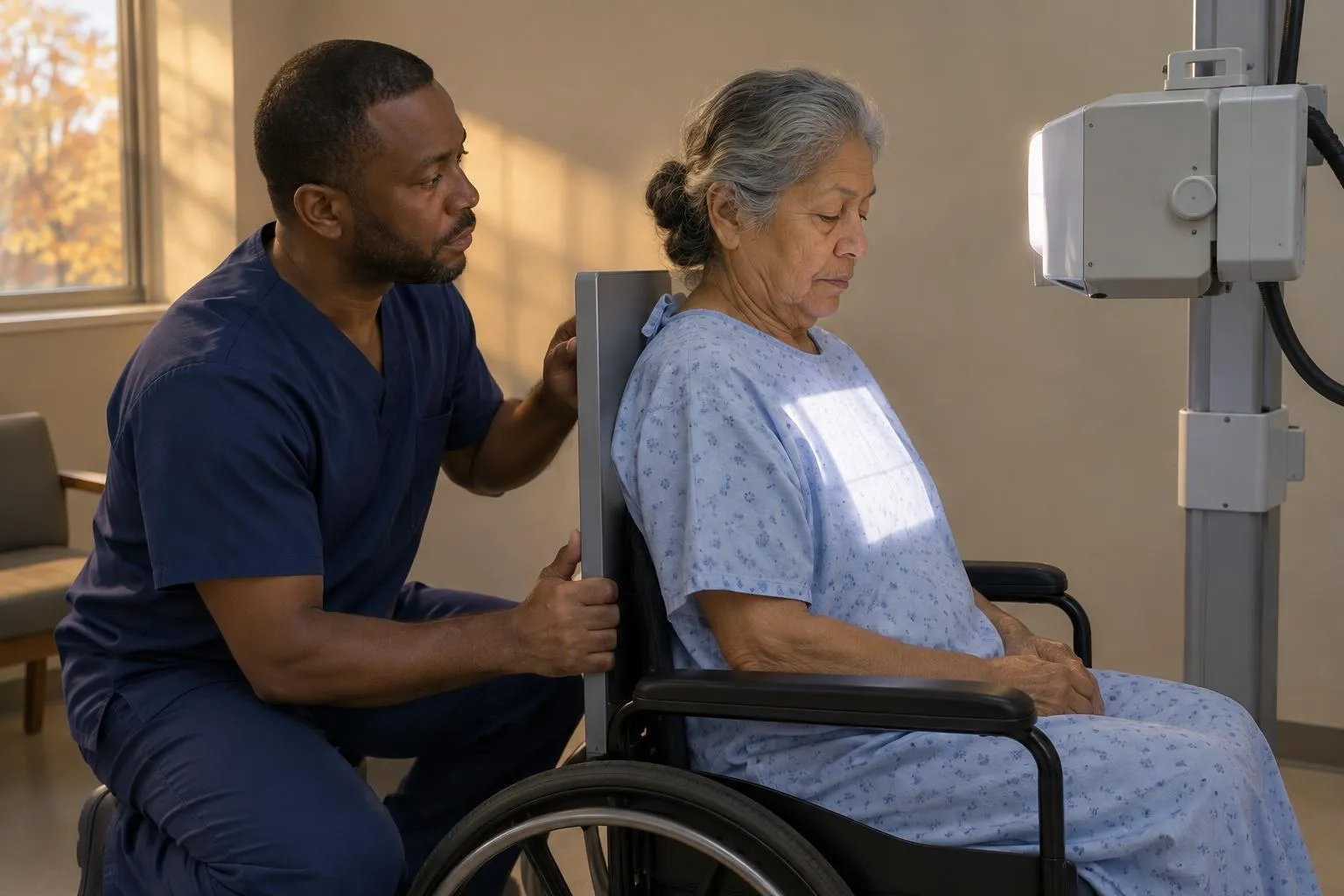
Step 4: Patient positioning and prep. This is where clinical skill matters most. Bedridden patients can’t stand against a wall plate. The technologist has to achieve diagnostic image quality while working around IV lines, oxygen equipment, contractures, and pain. They explain the procedure, answer patient questions, and physically adjust positioning — sometimes with staff assistance.
Reality Check:A portable chest X-ray on a cooperative, ambulatory patient takes about 10 minutes. A portable chest X-ray on a non-verbal dementia patient in a hospital bed with bilateral contractures and a central line takes significantly longer. Scope your expectations accordingly.
Step 5: Image acquisition and processing. The actual exposure is seconds. Processing on modern digital and computed radiography equipment is near-instant. The technologist reviews the image for diagnostic quality — if it’s not readable, they repeat it.
Step 6: Transmission. Images get sent electronically to medical records systems and/or a remote radiologist for interpretation. Stat reads can return in under an hour. Routine reads vary by provider and contract. The radiologist’s report goes back to the ordering physician.
Pro Tip:Ask your mobile X-ray provider upfront about their radiologist network and turnaround commitments. “Stat” means different things to different companies. Get the definition in writing before you’re staring at an acute respiratory case at 2 AM.
The Two Service Models (They’re Not the Same)
| Feature | In-Facility Mobile Unit | Contract Dispatch Service |
|---|---|---|
| Who employs the tech | The hospital/health system | Third-party mobile imaging company |
| Coverage area | Single facility or campus | Multi-facility regional zone |
| Dispatch coordination | Internal scheduling | Dedicated dispatcher with field routing |
| Typical use case | ICU, ED, surgical floors | SNFs, ALFs, hospice, home health |
| Equipment ownership | Facility-owned | Provider-owned |
| Billing model | Internal cost center | Contracted service fee |
If you’re running a skilled nursing facility or assisted living community, you’re almost certainly working with the contract dispatch model. A company like Sooner Mobile X-Ray (serving Oklahoma, Louisiana, and Arkansas) or Mobile Images dispatches technologists to you on a scheduled or on-call basis. You’re paying for a service, not a machine.
This distinction matters when something goes wrong. If the image quality is poor or a visit gets missed, the accountability chain is different depending on which model you’re using.
The Equipment, Demystified
Modern portable X-ray equipment runs on either digital radiography (DR) or computed radiography (CR). DR is faster — near-instant image review on a tablet or display panel. CR uses phosphor imaging plates that require a separate reader but are more durable in transport-heavy workflows.
Either way, you’re getting hospital-grade diagnostic imaging. This is not the grainy portable X-ray technology of 20 years ago. The gap in image quality between a good portable DR unit and a fixed-installation unit in a radiology department has shrunk dramatically.
The limiting factor isn’t usually equipment anymore. It’s patient cooperation, room access, and technologist skill.
Common Challenges (Real Ones)
The villain in most failed mobile X-ray engagements isn’t the technology — it’s logistics and communication.
Facilities that don’t communicate room numbers clearly waste 10 minutes per visit across a technologist’s full shift. Patients who aren’t prepped (still in restraints, in the middle of a meal, being bathed) create delays that cascade across the whole routing schedule. Staff who don’t understand radiation protocols slow down room setup.
These aren’t catastrophic problems. They’re coordination problems, and they’re almost entirely solvable with a clear intake process on your end.
Practical Bottom Line
If you’re evaluating mobile X-ray services for your facility, here’s the plan:
- Clarify the service model. Are you getting a dedicated tech assigned to your facility, or a regional dispatch service routing across multiple stops?
- Ask about radiologist turnaround. Specifically for stat reads. Get the SLA in writing.
- Understand what your staff needs to do. Room prep, patient prep, and who handles the scheduling request all affect how smoothly visits run.
- Ask about equipment. DR vs. CR matters for speed. If you’re ordering same-day stats regularly, you want DR.
- Start with a pilot. Most contract providers will do a trial engagement before you sign a formal agreement.
For a broader look at how mobile imaging fits into your care model, start with The Complete Guide to Mobile X-Ray Services.
The service is more capable than most administrators realize — and more operationally dependent on your facility than most providers will tell you upfront.
Done reading? Get quotes from mobile X-ray services near you.
Takes about a minute. Free, no obligation; providers reply to you directly.
Popular cities:
Nick built this directory to help SNF administrators and home health agencies find credentialed mobile imaging providers without wading through services that lack proper ARRT licensure or ACR accreditation — compliance gaps he uncovered when researching portable imaging options for a family member in long-term care.