Get free quotes from mobile imaging near you
Takes about a minute. Free, no obligation; providers reply to you directly.
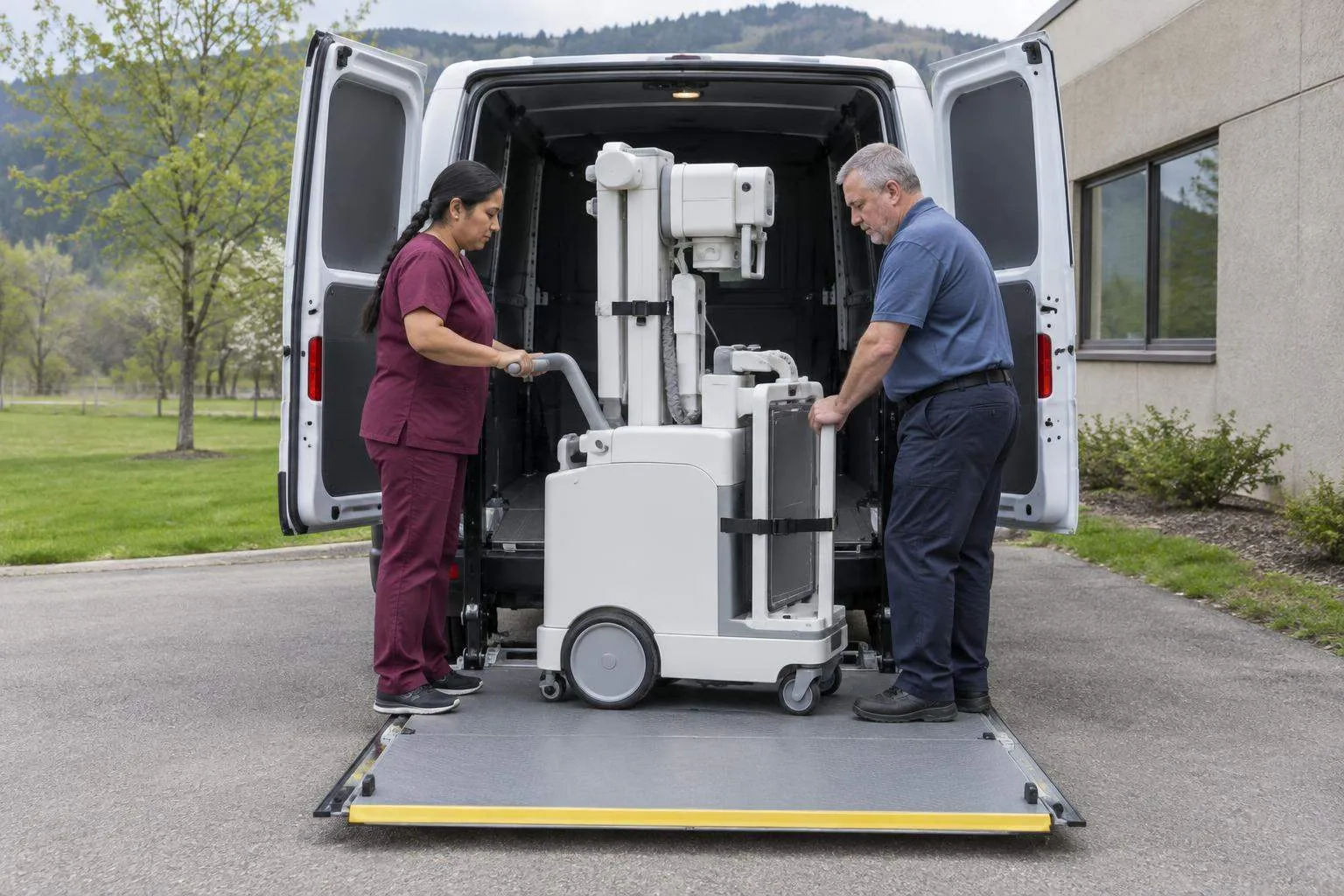
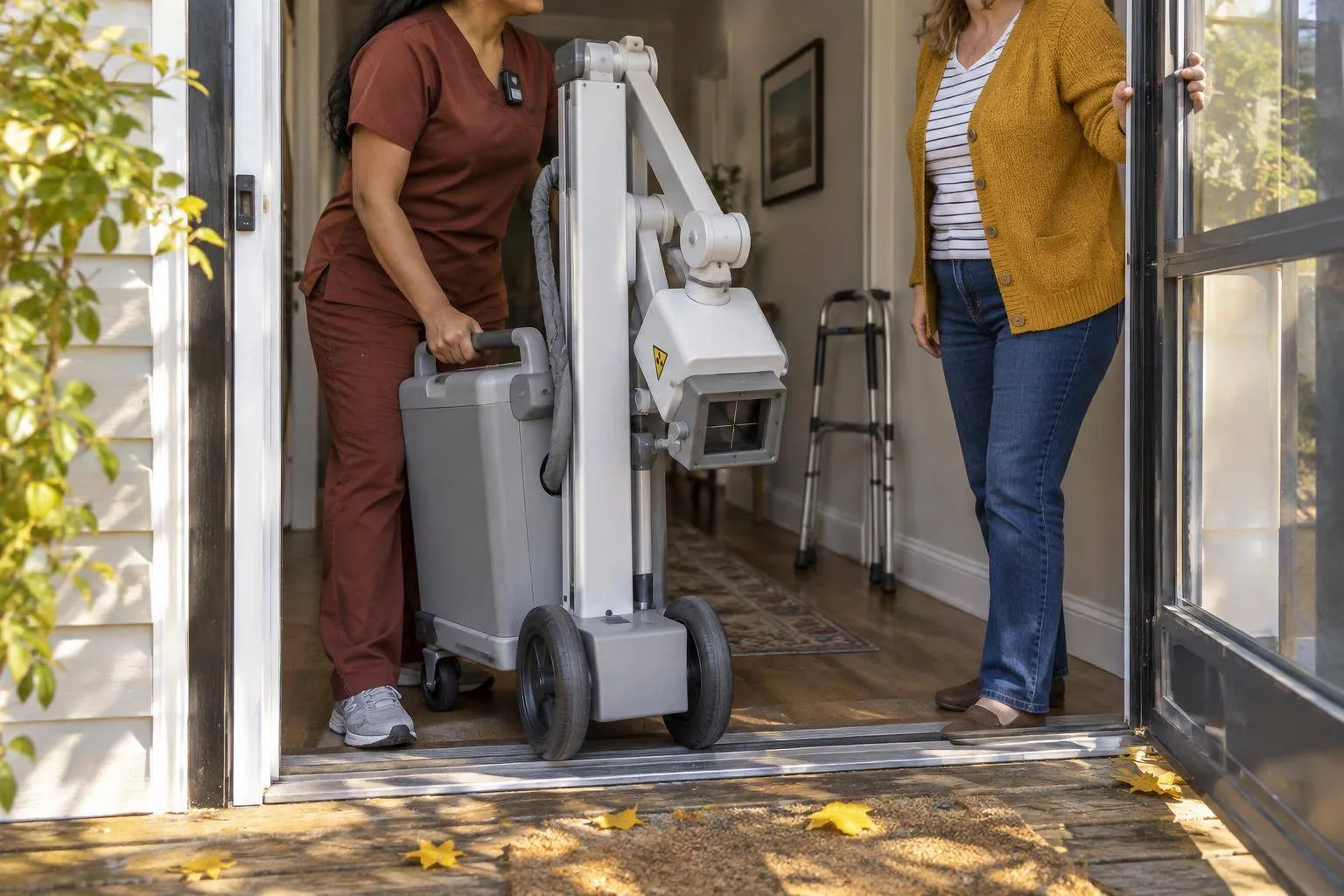
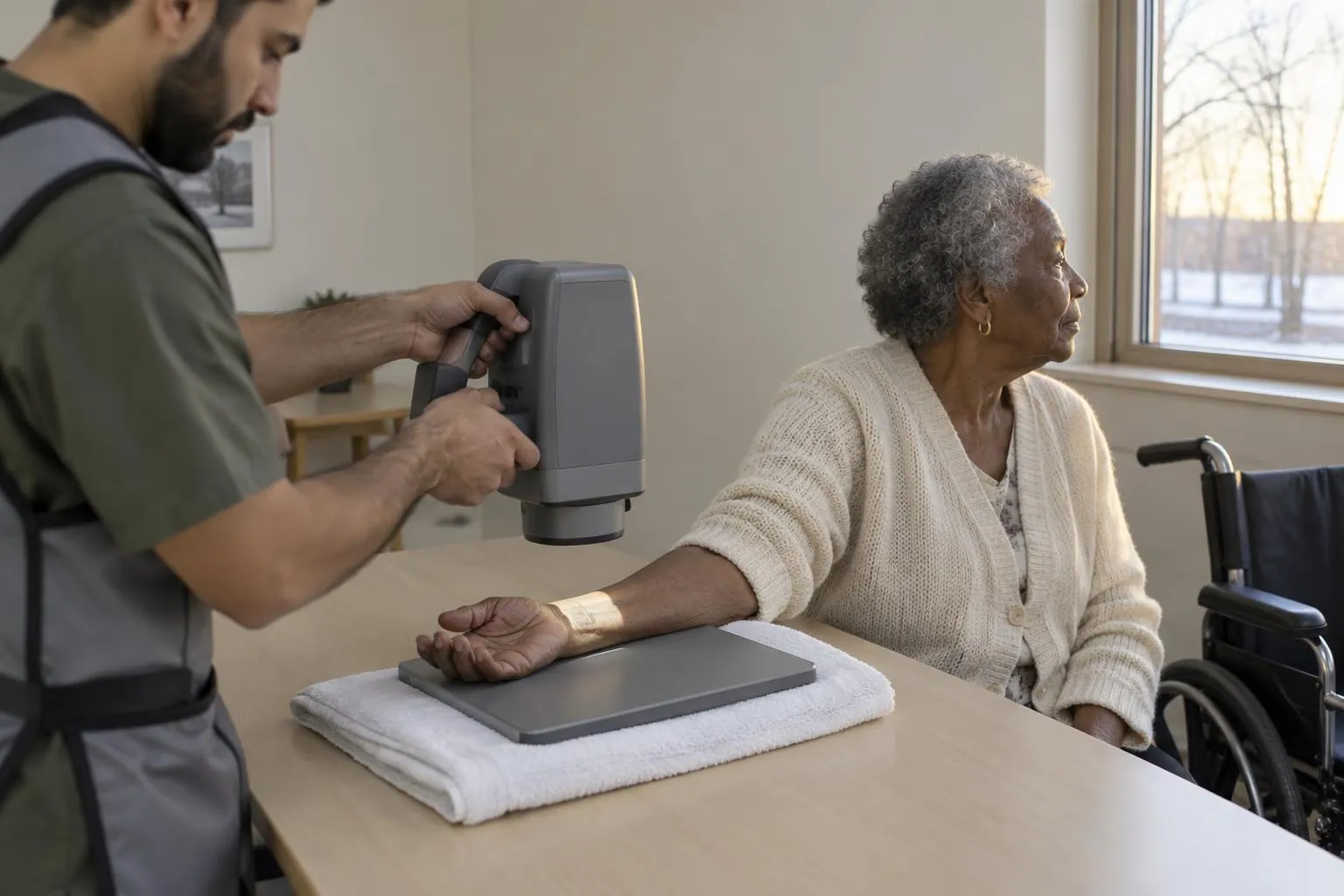
A few months ago, I sat in a conference room watching a mobile X-ray technologist unpack a device that looked like it belonged in a science fiction film — sleek, wireless, and barely larger than a tablet. The facility administrator next to me leaned over and whispered, “This is the same X-ray we were sending patients to the ER for six months ago.” She wasn’t wrong. And that moment crystallized something: the mobile X-ray industry isn’t slowly evolving. It’s being restructured from the ground up.
The Short Version:The mobile X-ray market is riding a convergence of AI diagnostics, miniaturized hardware, and post-pandemic demand for point-of-care imaging. The global mobile imaging services market sits at roughly $2 billion and is on track to nearly double by the early 2030s. If you work in SNFs, home health, or hospice and haven’t reassessed your imaging partner in the last 18 months, you’re likely leaving both clinical quality and cost efficiency on the table.
Key Takeaways:
- Mobile X-ray now prevents hospital admissions in 81% of normal X-ray cases — the ROI case for SNFs is no longer theoretical
- Portable X-ray devices are the fastest-growing segment, with handheld units commanding 60.8% market share in 2026
- AI-assisted image analysis is shifting from differentiator to baseline expectation
- North America leads the global market at 38.18% share, but rural access gaps are still the industry’s biggest unsolved problem
The Numbers Nobody Is Leading With
Here’s what most people miss when they talk about mobile imaging growth: the headline figures vary wildly depending on how you define the market. One research firm pegs mobile imaging services at $2.03 billion globally in 2025, projecting $3.26 billion by 2034. Another frames the broader mobile imaging category at $20.16 billion in 2025, growing at a CAGR of 8% toward $29.54 billion by 2030.
Both are correct — they’re measuring different slices.
The narrower figure captures specialized mobile imaging service providers (the companies actually sending technologists to your facility). The broader number includes portable device hardware, teleradiology platforms, and adjacent services. For anyone contracting with a mobile X-ray vendor, the operational metric that matters most is the hardware segment: portable X-ray devices alone are estimated at $9.86 billion in 2026, expanding at a 9.7% CAGR toward $18.85 billion by 2033.
That hardware growth is what’s pushing service quality up industry-wide.
The Technology Shift That’s Quietly Rewriting the Playbook
Three years ago, “digital X-ray” was a selling point. Now it’s table stakes — and the competition has moved up the stack.
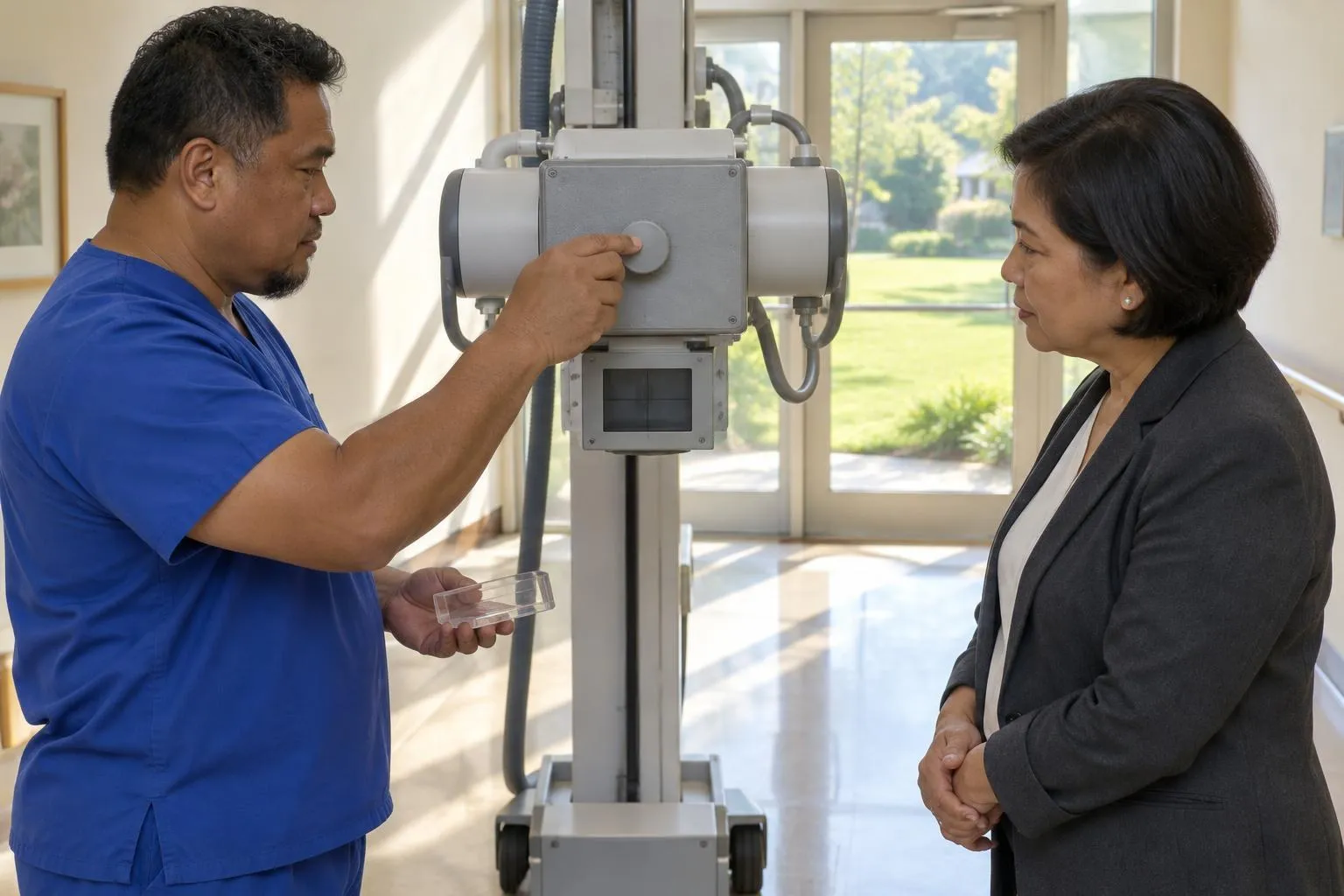
From film to flat panel to AI: The migration from computed radiography (CR) to direct digital radiography (DR) with flat panel sensors is nearly complete among serious providers. DR delivers faster image availability, easier EMR integration, and fewer repeat scans. What’s happening now is the layer above that: AI-enabled image analysis for triage acceleration and automated reporting flagging.
The miniaturization race: The handheld modality’s 60.8% share in 2026 isn’t a coincidence. Devices like Fujifilm’s FDR nano — designed to minimize X-ray dose while maintaining resolution comparable to fixed machines — and Siemens’ Mobilett Impact1 with full bedside digital workflow are becoming the reference standard. These aren’t “portable versions” of hospital equipment. They’re engineered specifically for point-of-care environments.
Pro Tip:When vetting a mobile X-ray provider, ask specifically whether they use DR flat panel detectors and whether their system supports direct DICOM transmission to your EMR. If they’re still using CR cassettes or printing physical images, that’s a significant workflow liability.
| Technology | Where It Stood (2022) | Where It Stands (2026) |
|---|---|---|
| Film / Analog | Still in use at some rural SNFs | Effectively obsolete among competitive providers |
| Computed Radiography (CR) | Common midrange option | Being phased out; slower, more manual |
| Digital Radiography (DR) | Premium differentiator | Baseline expectation |
| AI-Assisted Analysis | Pilot programs, limited rollout | Actively differentiating top-tier vendors |
| Cloud Storage + Remote Read | Optional add-on | Standard for stat turnaround workflows |
AI Integration: Hype vs. Operational Reality
I’ll be honest — when “AI in radiology” started showing up in every vendor deck, I tuned it out. It sounded like marketing.
Then I talked to a DON at a 120-bed SNF who described receiving a flagged pneumonia read at 11 PM, before the on-call physician had even looked at the image. The AI layer had already triaged the finding. That’s not hype.
The Business Research Company cites AI integration, connected platforms, and “smart mobility” as the defining trends of 2026 for this market. What that looks like operationally: AI models trained on millions of chest X-rays can flag potential pneumothorax, consolidation, or fracture patterns and surface them to radiologists for priority review. The radiologist still reads and signs every image — but the queue is no longer first-in, first-out. Acuity-based routing is happening.
For SNF and home health administrators, this translates directly to faster stat turnaround on the findings that actually matter.
Reality Check:AI-assisted triage doesn’t replace a credentialed radiologist. Any vendor claiming “AI reads” without a supervising radiologist signing the report is a compliance risk. The value of AI is in the workflow layer — not in replacing the licensed professional at the end of the chain.
The Access Problem Nobody Has Fully Solved
North America leads global mobile imaging market share at 38.18%, but that figure papers over a significant rural access gap. Teleradiology platforms and mobile on-site units are both expanding into underserved geographies, but coverage is uneven.
The 81% hospital admission prevention rate cited in Fortune Business Insights’ research is compelling — but it assumes mobile X-ray is available when and where the patient needs it. In rural counties with limited SNF census and low provider density, that availability isn’t guaranteed. This is where multi-service providers (X-ray + ultrasound + EKG under one contract) have a structural advantage: they can justify rural deployment economics in ways that single-modality providers can’t.
What’s Driving the Market Consolidation You’re Already Seeing
The portable X-ray device market saw meaningful M&A activity in the lead-up to 2026: FUJIFILM’s acquisition of Hitachi Diagnostic Imaging expanded their X-ray and CT service footprint across Europe. Shimadzu’s MobileDaRt Evolution MX8 expanded distribution outside Japan. Siemens continued building out its bedside workflow ecosystem.
At the service provider level, regional mobile imaging companies are being absorbed by larger platforms at an accelerating rate. The economics favor scale: AI platforms, cloud infrastructure, and radiologist networks all have high fixed costs that get cheaper per-read as volume grows.
For facilities evaluating vendors, this means pricing pressure is mostly going down — but service continuity risk is going up as smaller independents get acquired or exit.
Practical Bottom Line
The mobile X-ray market in 2026 is not a niche service anymore. It’s infrastructure.
If you’re an SNF administrator or home health agency director, here’s what the trend data actually means for your next vendor conversation:
- Demand DR flat panel + AI triage as baseline, not premium. The technology is standard enough that you shouldn’t be paying extra for it.
- Ask about stat turnaround SLAs specifically. AI-assisted workflows are enabling sub-2-hour reads at some providers. Know what you’re getting.
- Evaluate multi-modality coverage. Providers offering X-ray, ultrasound, and EKG under one contract are better positioned for rural and complex-acuity populations.
- Watch the M&A landscape. If your current provider is a regional independent, ask about their ownership structure. Continuity matters.
For a deeper look at how mobile X-ray services work operationally — credentialing, equipment standards, and what to look for in a provider contract — see The Complete Guide to Mobile X-Ray Services.
Done reading? Get quotes from mobile X-ray services near you.
Takes about a minute. Free, no obligation; providers reply to you directly.
Popular cities:
Nick built this directory to help SNF administrators and home health agencies find credentialed mobile imaging providers without wading through services that lack proper ARRT licensure or ACR accreditation — compliance gaps he uncovered when researching portable imaging options for a family member in long-term care.