Get free quotes from mobile imaging near you
Takes about a minute. Free, no obligation; providers reply to you directly.
A radiologist friend once walked me through a patient case over Zoom while I watched her pull up a chest X-ray on her screen — image captured thirty minutes earlier at the patient’s home, transmitted before the patient had finished putting their shoes back on. She circled a finding with her mouse and said, “We caught this because they didn’t have to drive anywhere.” That stuck with me.
The debate over remote vs. in-person mobile X-ray services gets muddied by the same hype cycle that infects every “telehealth vs. traditional” conversation. One side oversells the convenience revolution. The other overstates the limits of portable equipment. Neither is fully right.
The Short Version:For follow-up imaging, monitoring chronic conditions, and serving patients who can’t travel, remote mobile X-ray workflows work exceptionally well. For acute presentations requiring hands-on assessment — suspected fractures needing casting, post-operative wound checks, patients with altered mental status — you still need a trained technologist in the room. The real question isn’t remote vs. in-person; it’s which combination matches your patient’s clinical situation.
Key Takeaways:
- Mobile imaging costs up to 85% less than hospital-based imaging — the savings hold regardless of whether interpretation happens remotely or on-site
- 80% of patients globally lack adequate diagnostic access; portable digital radiography is the primary lever changing that
- Ultra-portable DR systems now match full mobile unit image quality — FDA-certified, battery-powered, wireless
- The post-pandemic shift normalized teleradiology workflows that were already proven; the technology didn’t change, the willingness to use it did
What “Remote” Actually Means Here
Nobody tells you this distinction clearly: “remote mobile X-ray” isn’t a single thing. It covers at least two different workflows that get conflated constantly.
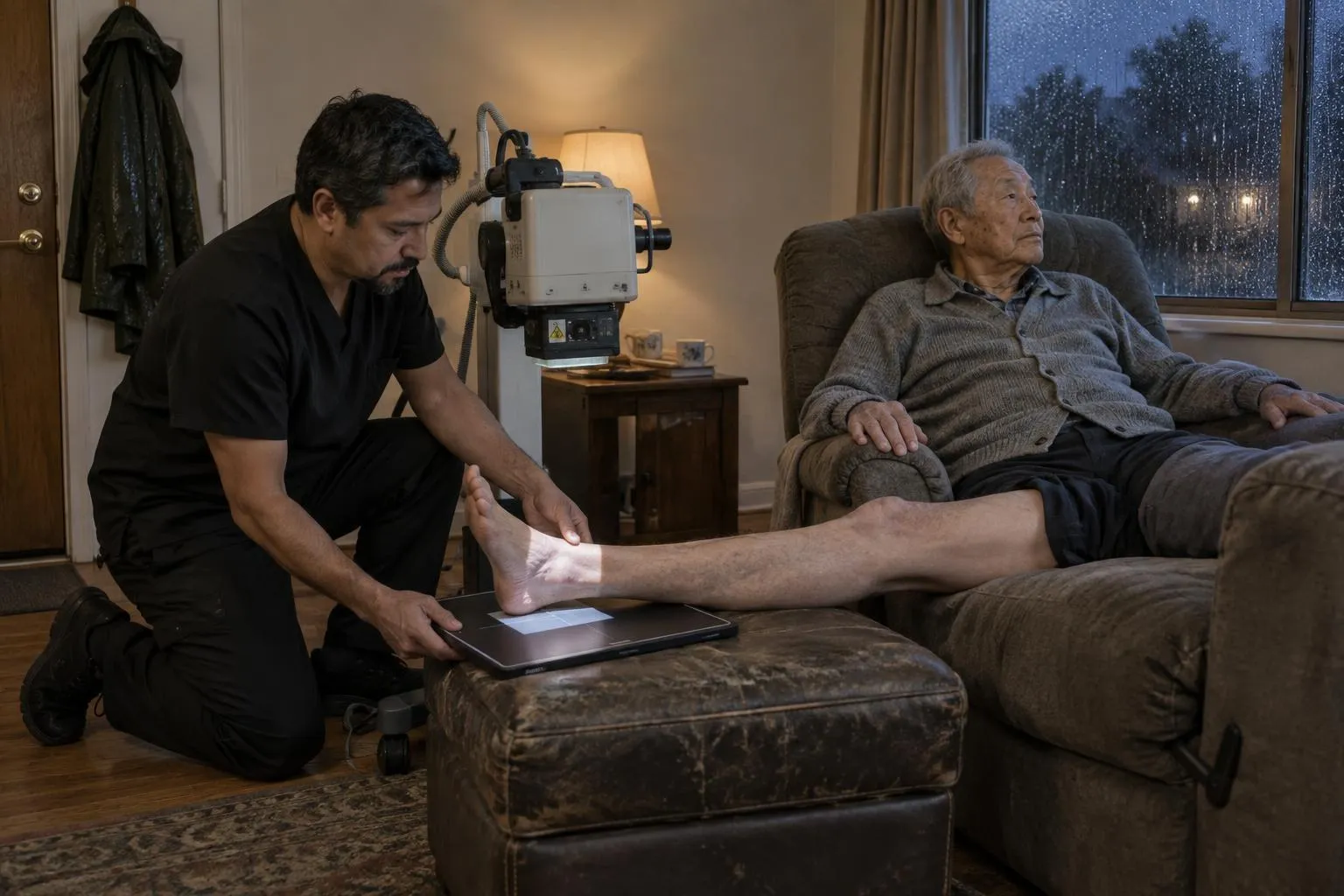
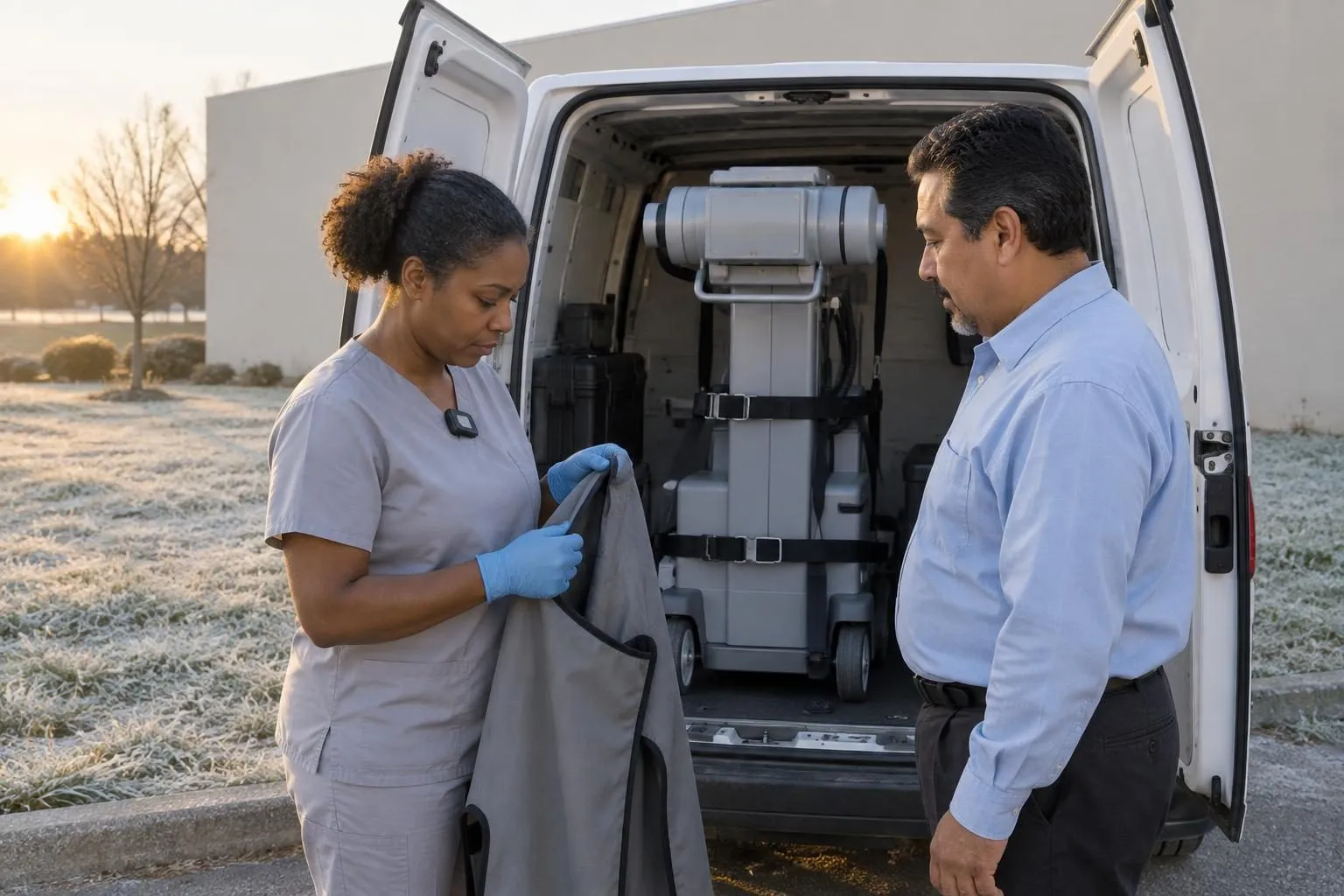
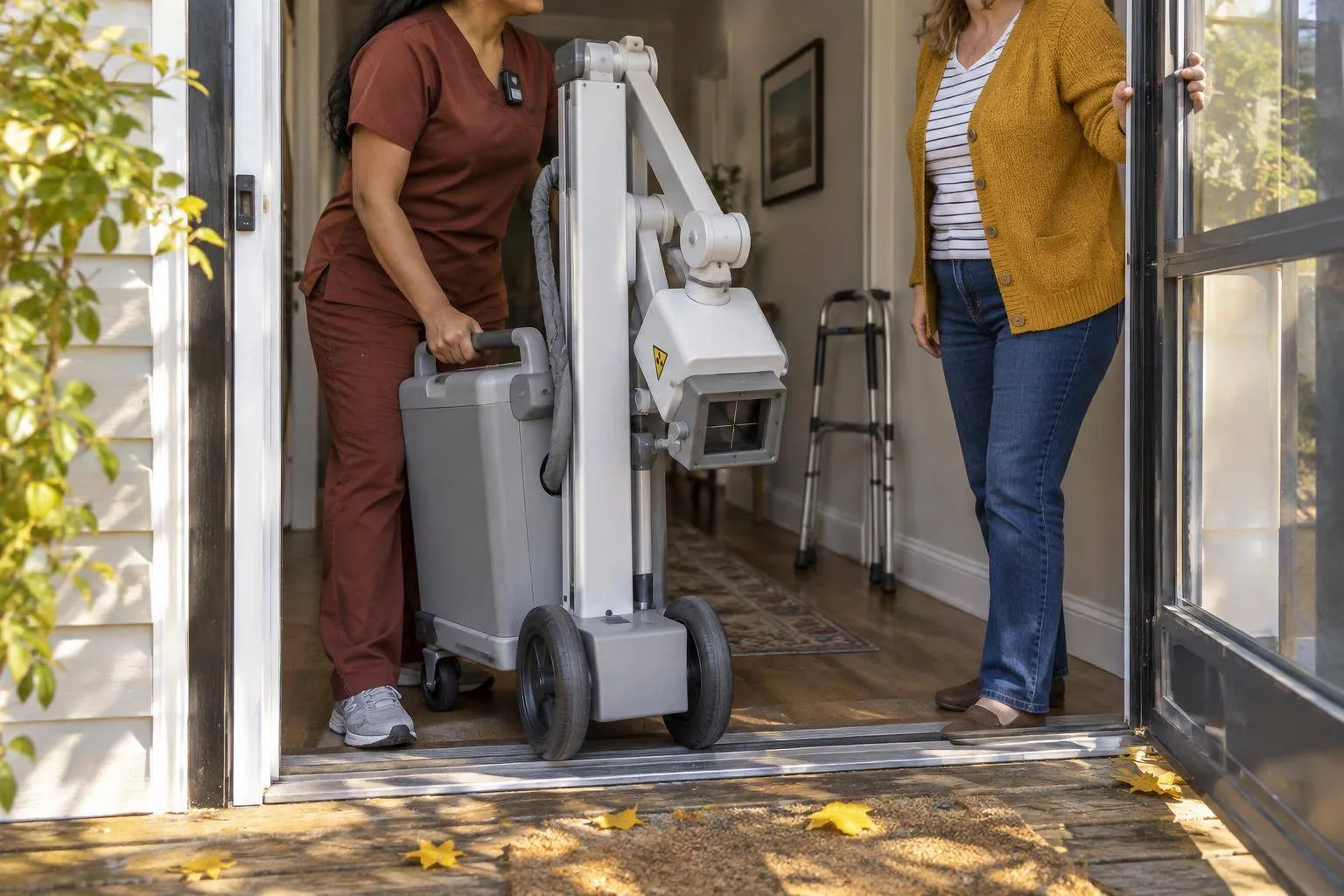
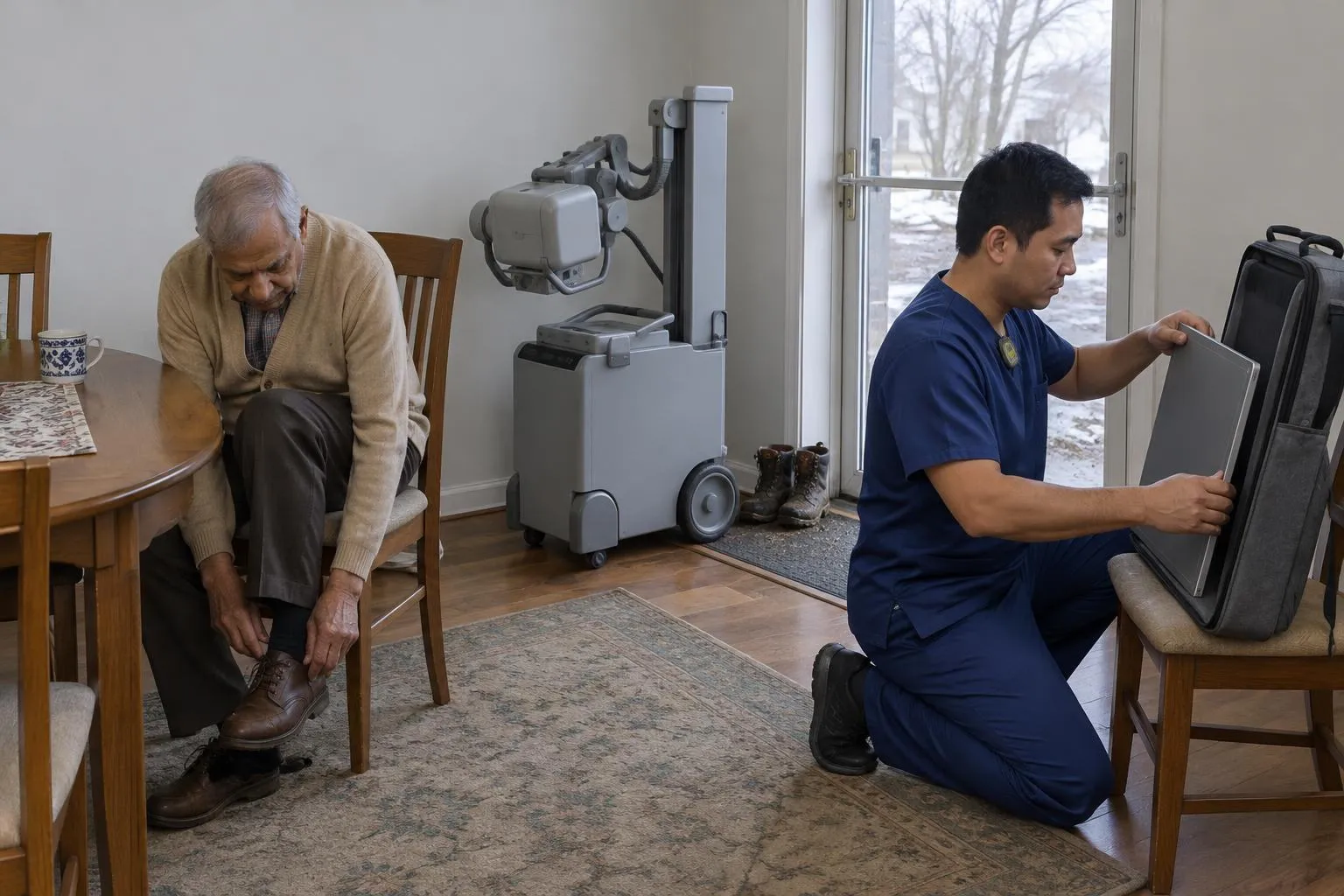
Scenario A: A radiologic technologist physically travels to the patient (SNF, home, hospice) with portable DR equipment, captures images on-site, then transmits them electronically to a radiologist working remotely for interpretation. The tech is in the room. The radiologist is not.
Scenario B: A patient attends a telehealth visit, a provider orders imaging, and portable X-ray is captured at home or a local facility — then reviewed via screen-share during the video consultation or asynchronously before a follow-up call.
Both are “remote” in some sense. They serve different needs. Mixing them up leads to bad purchasing decisions and worse care coordination.
The Comparison You Actually Need
| Factor | Remote Interpretation (Tech on-site, radiologist offsite) | In-Person Mobile (Tech + clinical staff both present) |
|---|---|---|
| Best for | Routine follow-ups, SNF residents, chronic condition monitoring | Acute presentations, post-op checks, fracture assessment |
| Image quality | Equivalent — ultra-portable DR is FDA-certified for full-body imaging | Equivalent |
| Turnaround | Stat reads available; offsite radiologist workflow is standard | Immediate discussion possible if physician on-site |
| Cost | Up to 85% less than hospital-based imaging | Similar savings, plus on-site physician time |
| Infection risk | Lower — single technologist, minimal contact | Higher — more personnel, potential facility exposure |
| Patient transport | Eliminated | Eliminated |
| Hands-on exam possible | No | Yes, if physician accompanies |
| Regulatory standard | Teleradiology = established, insurer-accepted | Traditional workflow |
The hardware story has largely been resolved. Systems like MinXray’s TR90BH — battery-powered, wireless, FDA-certified — produce images that hold up against full cart-based mobile systems. Image quality concerns were a legitimate objection in 2015. They’re mostly noise now.
Reality Check:If your hesitation about remote interpretation is “but can they really see enough?”, the answer is yes — if the acquisition is done correctly by a credentialed technologist. The weak link in teleradiology is almost never the radiologist’s monitor. It’s usually positioning, exposure settings, or patient cooperation on the capture end.
When Remote Works Exceptionally Well
SNF and assisted living follow-ups. A patient recovering from pneumonia doesn’t need to be loaded into a transport van to confirm lung clearing. A technologist visits, captures the image in ten minutes, and the attending has a read before the end of their shift. This is where the 85% cost reduction is most tangible — no transport fees, no hospital facility charge, no waiting room exposure for an immunocompromised 84-year-old.
Orthopedic monitoring. Dr. Peroutka at LifeBridge Health described exactly this workflow: home X-ray captured, shared via screen during the telehealth visit, follow-up fracture healing confirmed without the patient leaving. The visit that used to require a car ride now doesn’t.
Health deserts and rural populations. Evan Ruff of OXOS Medical put it directly: “We want anyone, anywhere, to access radiological diagnostics at point of care.” The traditional setup requires roughly $1 million in infrastructure — lead-lined rooms, fixed equipment, full facility overhead. Ultra-portable DR eliminates that barrier entirely for communities that never had imaging access in the first place.
Pro Tip:For SNF administrators evaluating mobile X-ray contracts, ask specifically whether the provider offers stat teleradiology reads with defined turnaround SLAs. “Remote interpretation” without a committed read time is just slower in-person interpretation.
When You Need Someone Actually in the Room
I’ll be honest — the telehealth optimists sometimes gloss over this part.
A remote radiologist can read an image with full diagnostic accuracy. What they cannot do is notice that a patient winced when the technologist repositioned them. They can’t palpate a tender area to guide better image positioning. They can’t recognize that a patient’s confusion suggests something beyond what the X-ray shows.
The cases where in-person presence matters:
- Acute fractures requiring immediate casting or splinting — the care decision requires hands-on assessment beyond the image
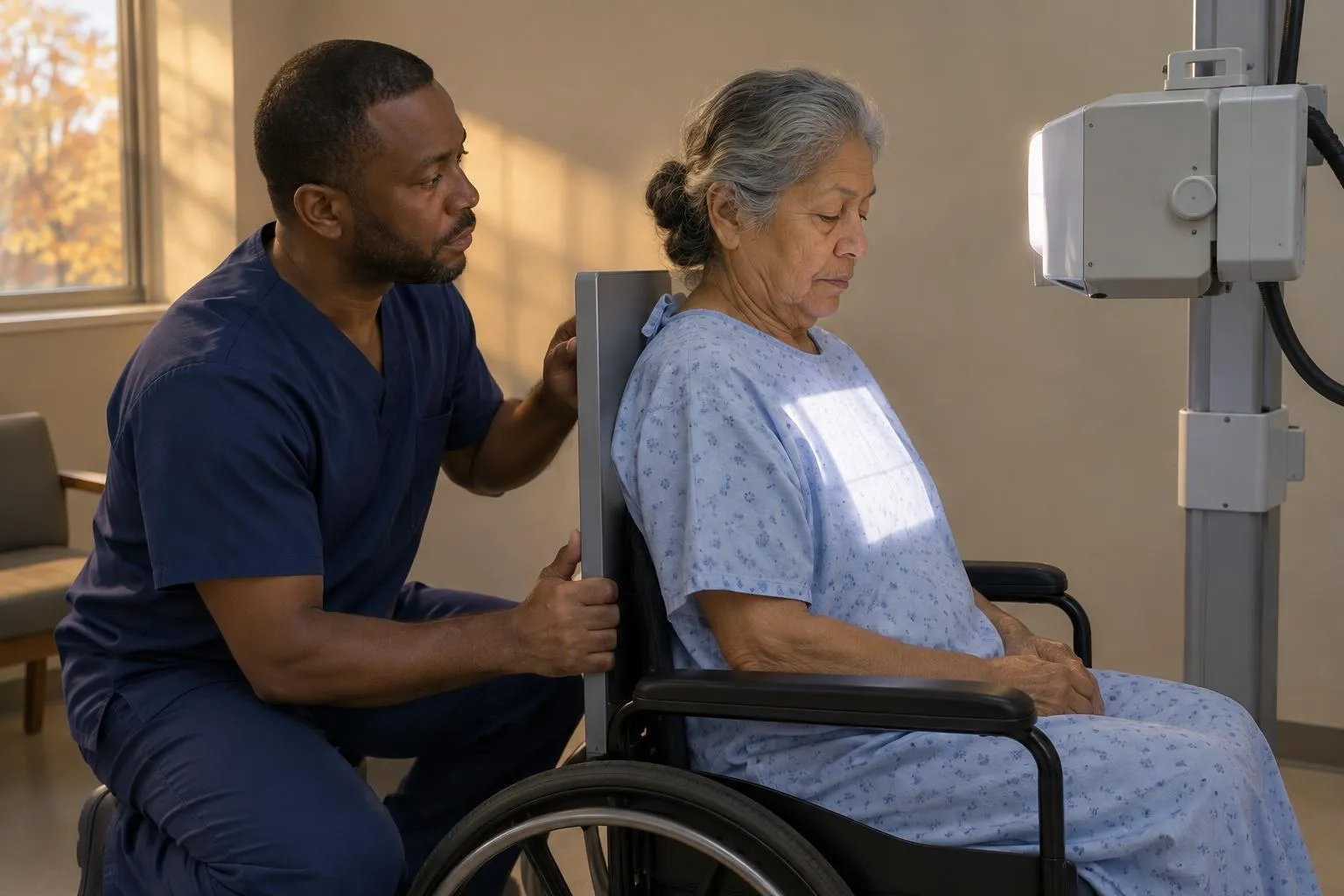
- Patients with altered mental status or dementia — safe positioning requires skilled human judgment in real time
- Post-surgical wound evaluation — the X-ray is one data point; the wound itself is another
- Pediatric imaging — immobilization, positioning, and dose management all benefit from experienced on-site clinical oversight
The complete guide to mobile X-ray services covers the full workflow from equipment selection to staffing models — worth reading before you finalize any service contract.
The Post-Pandemic Reality Check
Here’s what most people miss about the current moment: the technology enabling remote mobile X-ray workflows didn’t meaningfully improve between 2019 and 2021. What changed was institutional willingness to use it. Teleradiology existed. Portable DR existed. Remote consultation existed. The pandemic forced every stakeholder — insurers, hospital systems, SNF operators, patients — to actually try it.
The result: workflows that were considered niche or experimental are now routine. Reimbursement pathways that required fighting through prior authorization are now standard. The infrastructure is built. The resistance is gone.
What this means practically: if you’re an SNF administrator or home health agency still defaulting to hospital transport for routine imaging, you’re paying 2019 prices for 2019 workflows. The alternative is proven, insurer-accepted, and cheaper by a factor that shows up clearly on a quarterly budget.
Practical Bottom Line
If your patients are in skilled nursing, assisted living, or home health for monitoring or follow-up: Remote interpretation via a contracted mobile X-ray provider is almost certainly the right call. Evaluate providers on technologist credentials (ARRT licensure), equipment specifications (wireless DR, FDA-certified), and radiologist turnaround SLAs.
If your cases regularly involve acute presentations or require immediate clinical decision-making beyond imaging: Build a hybrid model. Contract mobile X-ray for the high-volume routine cases and maintain a clear escalation protocol for cases that need hands-on assessment.
If you’re evaluating cost: The 85% reduction vs. hospital-based imaging is real and documented. The question isn’t whether mobile is cheaper — it is — but whether your specific workflow requires the incremental cost of additional on-site clinical personnel.
The technology debate is settled. The workflow design question is where the actual work is.
Done reading? Get quotes from mobile X-ray services near you.
Takes about a minute. Free, no obligation; providers reply to you directly.
Popular cities:
Nick built this directory to help SNF administrators and home health agencies find credentialed mobile imaging providers without wading through services that lack proper ARRT licensure or ACR accreditation — compliance gaps he uncovered when researching portable imaging options for a family member in long-term care.