Get free quotes from mobile imaging near you
Takes about a minute. Free, no obligation; providers reply to you directly.
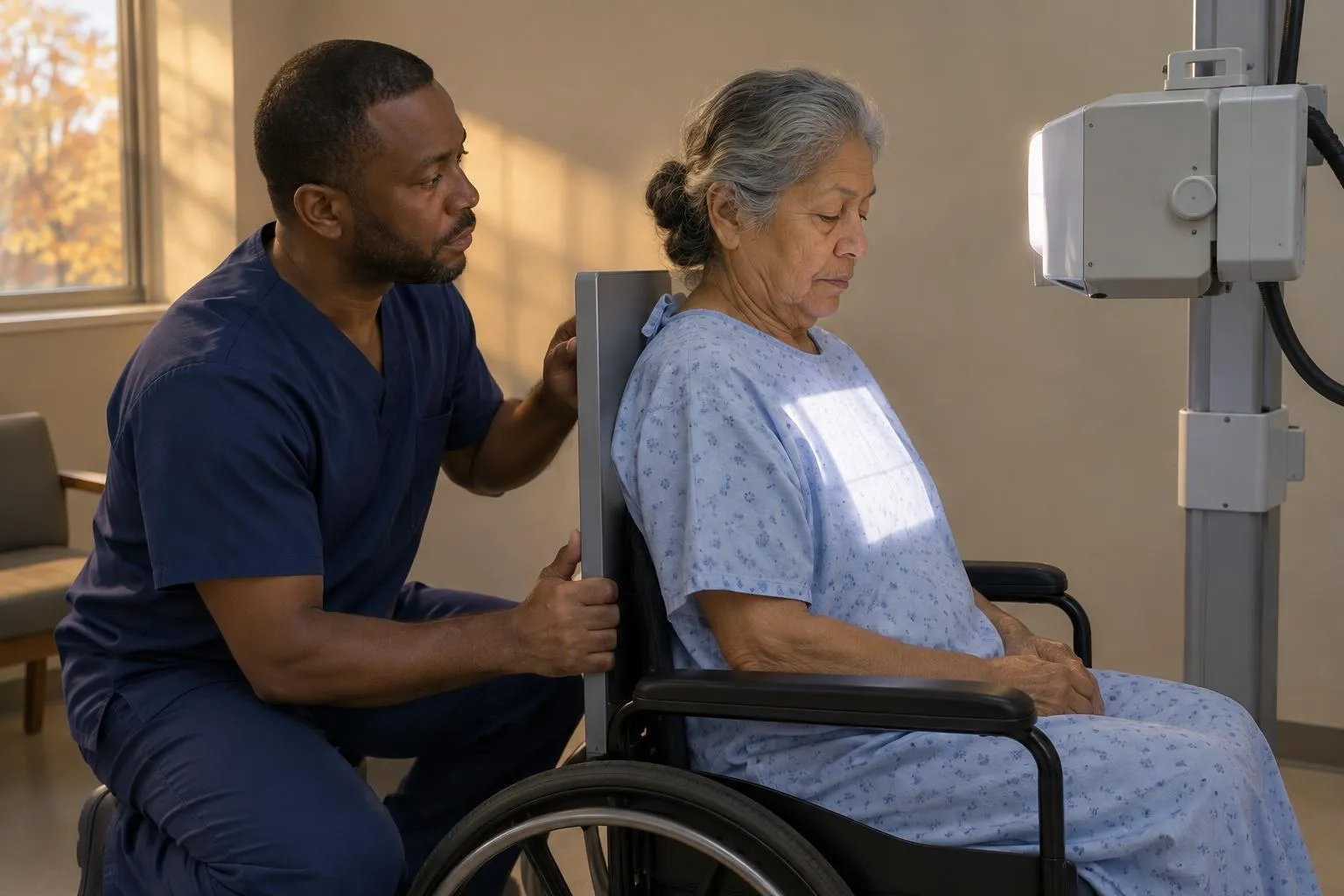
The administrator told you the mobile X-ray service would “be there by 9 AM.” At 10:30, a tech finally showed up with equipment that hadn’t been serviced in eight months, your resident with the suspected hip fracture was still waiting in bed, and the family was calling the nurses’ station every fifteen minutes. The images came back blurry. The radiologist flagged them as non-diagnostic. You were back to square one — and now you had to arrange transport anyway.
That situation is preventable. But only if you ask the right questions before you sign a contract.
The Short Version:Most mobile X-ray providers sound identical on their websites. The differences that actually matter — equipment certification, radiologist credentials, turnaround time guarantees, and financial stability — only surface when you push with specific questions. This list is your push.
Key Takeaways
- Same-day imaging is the baseline expectation; anything slower is a red flag
- OEM-certified, FDA-approved equipment with full-service contracts isn’t a premium — it’s the minimum
- Board-certified radiologist reads with digital delivery should be non-negotiable
- Provider financial instability is a real risk; diversified client bases signal staying power
Here’s what most people miss: hiring a mobile X-ray service isn’t like hiring a plumber. When it goes wrong, a resident is the one paying the price. Use these 15 questions as your interview script.
1. What types of mobile imaging services do you offer?
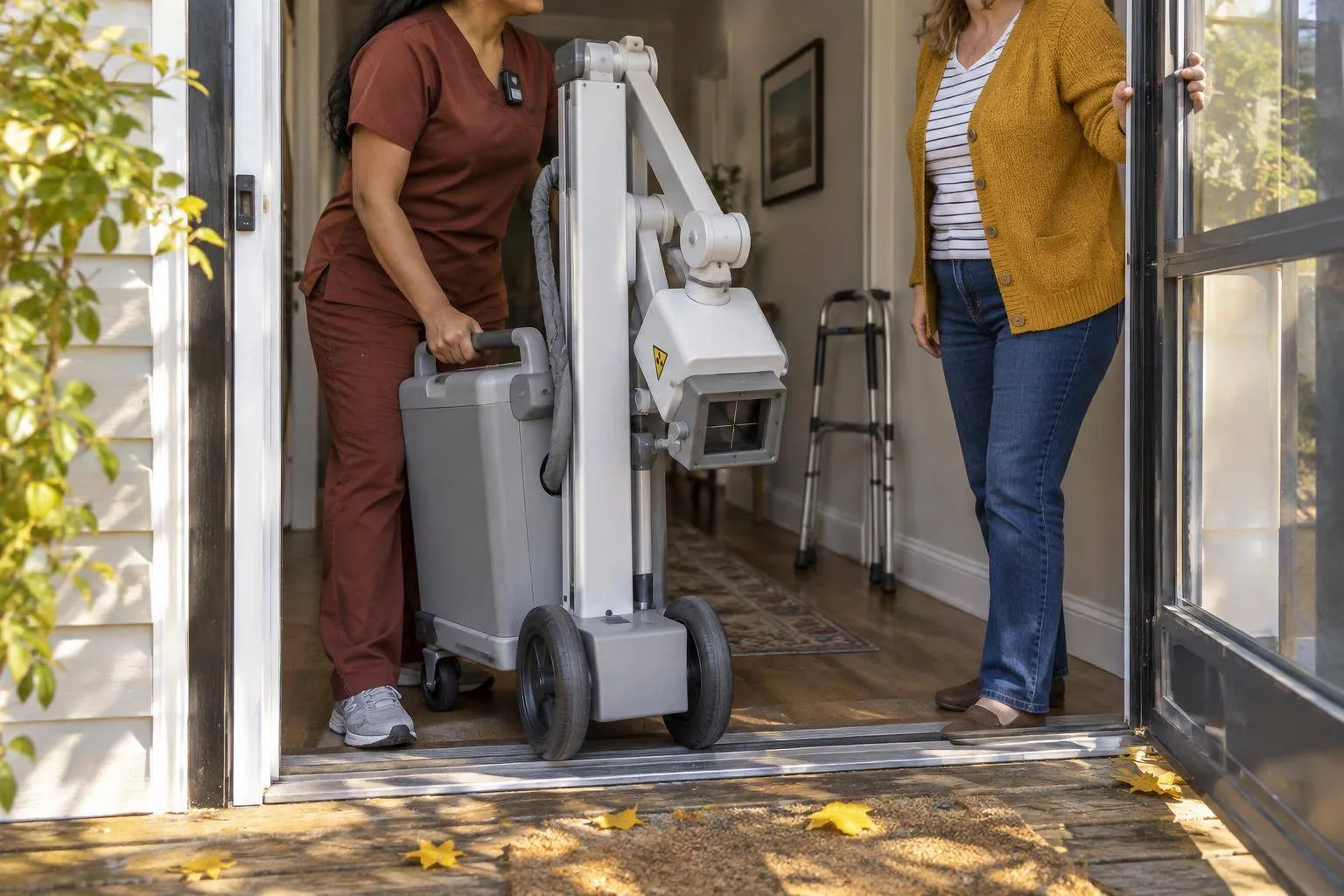
Not every provider covers every care setting. Ask whether they serve nursing homes, assisted living, memory care, hospice, and private homes — and whether their equipment and logistics actually match your facility’s layout and patient volume. A good answer names specific service types and explains which fits your situation.
2. Do you provide site planning before the first visit?
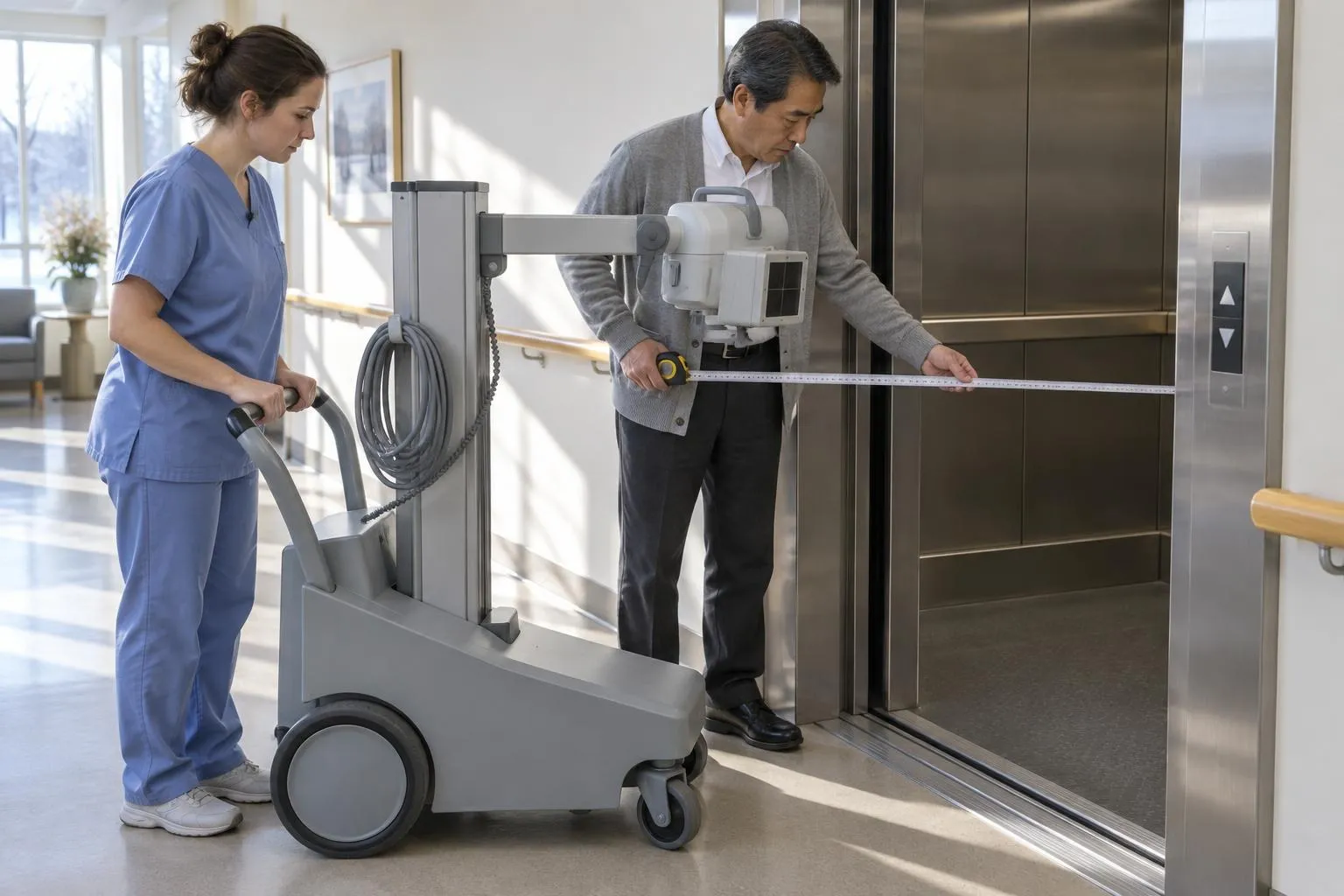
A provider who shows up without understanding your floor plan, elevator access, or infection-control zones will slow you down and frustrate your staff. Reputable services offer a pre-contract site assessment. If they don’t mention it, ask why.
3. What is your delivery and setup process?
You need to know how long it takes from arrival to first image, what your staff is expected to do, and whether the tech can work independently in a resident room. A confident, specific answer here signals operational maturity. Vague answers signal improvisation.
4. Is your equipment OEM-certified and FDA-approved?
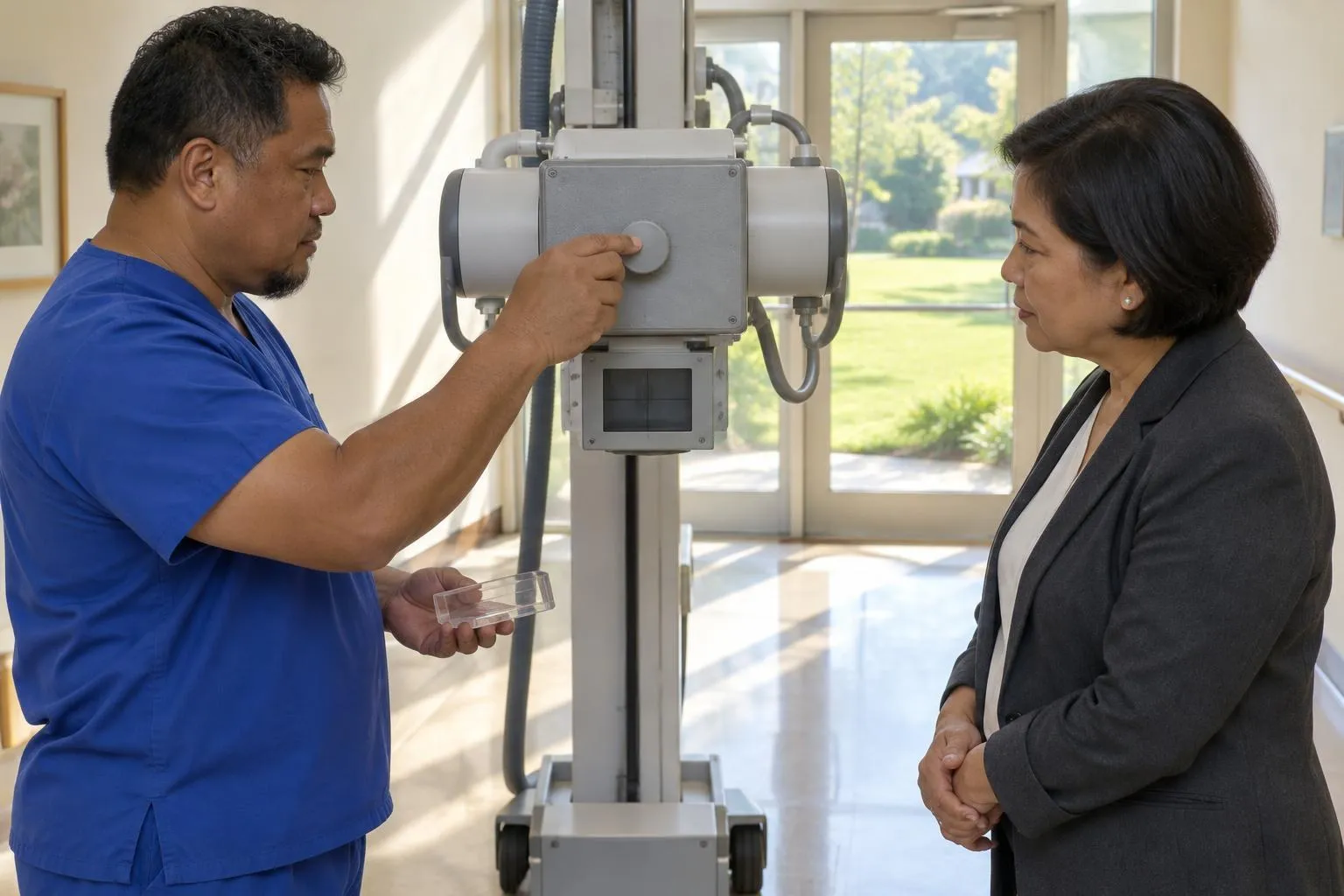
Reality Check:Third-party serviced equipment may look fine and still produce non-diagnostic images — or fail mid-exam. OEM-certified, FDA-approved portable digital units with full OEM service contracts (not time-and-materials agreements) are the industry standard for a reason. Don’t accept a “yes, it’s good equipment” answer. Ask for documentation.
5. Who services your equipment, and how fast can you repair a failure?
Equipment failures happen. What matters is what happens next. OEM-exclusive service contracts with 24/7 remote monitoring — including alerts for environmental issues like temperature changes — mean problems get caught early and fixed fast. Ask for their average repair turnaround time and whether they have backup units.
6. How quickly do you complete imaging, and what’s your stat turnaround?
Same-day completion for routine orders is the baseline. Emergency imaging should be prioritized and completed within hours. If a provider hedges or gives you a range that extends to “the next business day,” that’s a problem for a resident with acute chest pain or a suspected fracture.
7. Are results read by board-certified radiologists?
Board certification isn’t a bonus feature. It’s the credential that tells you the radiologist interpreting your resident’s images has met a defined national standard. Ask specifically — not “are results read by a radiologist” but “are they board-certified?” Then ask how results are delivered and in what format.
8. What is your digital delivery process and typical report turnaround?
Quick digital delivery to your EHR or care team — not a fax three hours later — is what enables timely clinical decisions. Ask whether they integrate with your existing systems and what the expected time is from image acquisition to final read. A good answer is specific: “Final reports within two hours for routine, thirty minutes for stat.”
9. What cost savings do you offer compared to off-site transport?
| Cost Category | Off-Site Transport | Mobile X-Ray Service |
|---|---|---|
| Ambulance fee | $800–$2,500+ | Eliminated |
| Wheelchair van | $50–$200/trip | Eliminated |
| Staff escort time | 2–4 hours | 20–40 minutes |
| Resident disruption | High | Low |
| Clinical delay risk | High | Low |
The savings are real, but ask the provider to quantify them for your facility type and volume. Any provider worth hiring has done this math before.
10. How financially stable is your organization, and how diversified is your client base?
Pro Tip:A provider that’s 80% dependent on one hospital system is one contract loss away from shutting down — mid-contract, mid-month, with your residents waiting. Ask directly: “What percentage of your revenue comes from your largest client?” Healthy providers have diverse books and won’t flinch at the question.
Industry consolidation is real. COVID-19 accelerated it. Providers with narrow client bases are higher-risk partners.
11. Do you use AI-assisted imaging tools, PACS integration, or in-house IT?
Technology adoption signals whether a provider is building for the next five years or coasting on legacy systems. PACS integration means seamless image archiving. AI-assisted reads can flag anomalies faster. In-house IT means faster troubleshooting. You’re not requiring cutting-edge — you’re screening for providers who aren’t falling behind.
12. How do you protect imaging data and maintain HIPAA compliance?
Mobile imaging generates PHI that travels across networks and devices. Ask about encryption standards, access controls, breach protocols, and how long data is retained. “We’re HIPAA compliant” is not an answer. Ask what that compliance actually looks like operationally.
13. What is your scheduling process, and how far in advance do you book?
A service that requires 72 hours’ notice for a routine chest X-ray isn’t built for the pace of skilled nursing care. Ask how they handle same-day requests, after-hours emergencies, and high-volume days. The scheduling process reveals more about a provider’s actual capacity than any sales pitch.
14. Which facility types do you specialize in, and how many SNFs do you currently serve?
Experience in skilled nursing, assisted living, and memory care settings isn’t transferable from outpatient imaging. Residents are higher acuity, less mobile, and often cognitively impaired. A provider who primarily serves outpatient clinics won’t have the workflow or the patience for a 94-year-old with dementia who needs repositioning three times. Specialization matters.
15. What are your technologist qualifications, and how do you train and retain staff?
ARRT licensure is the floor, not the ceiling. Ask whether techs have SNF-specific experience, how they’re trained on your facility’s protocols, and what the company’s turnover rate looks like. High turnover means you’re constantly onboarding strangers into your facility. Strong providers invest in their techs — and it shows in the quality and consistency of their service.
Practical Bottom Line
Print these questions. Bring them to every vendor call. A provider who gets defensive, gives vague answers, or can’t produce documentation on equipment certification or radiologist credentials is telling you everything you need to know.
The best mobile X-ray services welcome these questions because they’ve already solved for them. That confidence — backed by specific, documentable answers — is what separates a vendor from a partner.
For a full overview of how mobile imaging works and what to expect from a quality provider, see The Complete Guide to Mobile X-Ray Services. If you’re comparing service tiers or negotiating contracts, the breakdown of what each service level actually includes will save you time before you even get to the interview stage.
Nobody tells you this part: the providers worth hiring will ask you questions too. They want to understand your patient population, your workflow, and your clinical priorities. If a vendor does all the talking and none of the listening, keep looking.
Done reading? Get quotes from mobile X-ray services near you.
Takes about a minute. Free, no obligation; providers reply to you directly.
Popular cities:
Nick built this directory to help SNF administrators and home health agencies find credentialed mobile imaging providers without wading through services that lack proper ARRT licensure or ACR accreditation — compliance gaps he uncovered when researching portable imaging options for a family member in long-term care.