

Bedside Imaging in Austin, TX
Compare curated bedside imaging, check certifications, read reviews, and request quotes — all in one place.
Top-Rated in Austin
No providers match this filter.
Providers with an office in the Austin area, matched by the ZIP code of their published address.
Need help choosing? Get matched with top providers in seconds.
0 providers selected
Are you a mobile X-ray service in Austin? Already listed here: Principle Health Systems, Mobile X-Ray of Austin, Inc. dba HealthCare Imaging, Roadrunner Radiology and 1 more.
List your businessHow BedsideImaging Works
Browse & Compare
View curated providers, check certifications, and read real client reviews.
Request Quotes
Select up to 5 providers and send your project details. Free, no obligation.
Book Your Mobile X-ray Service
Compare quotes, check availability, and book directly with the provider.
Finding a qualified mobile X-ray service in Austin shouldn’t feel like a procurement exercise from hell — but between the city’s explosive growth and the resulting flood of providers ranging from credentialed specialists to weekend warriors with a portable unit and a prayer, it genuinely is. Austin now has more than 220 skilled nursing and assisted living facilities within Travis and Williamson counties alone, which means demand is real, competition is fierce, and the gap between a great provider and a liability risk is wider than it looks on a sales call. This directory exists to close that gap fast.
How to Choose a Mobile X-Ray Service in Austin
-
Verify ARRT licensure and Texas state credentialing. Texas requires radiologic technologists to hold an active CRT (Certified Radiologic Technologist) state license in addition to ARRT RT(R). Ask for both. A provider who hedges on producing the state license number is a provider you don’t contract with.
-
Ask about their radiologist read network. The technologist takes the image — the radiologist interprets it. In a market as large as Austin, most reputable providers have formalized teleradiology agreements with board-certified radiologists who can deliver preliminary reads within an hour. If they’re vague about who reads their studies, that vagueness will eventually show up in a patient outcome.
-
Confirm stat and after-hours capacity. Austin traffic is genuinely brutal — a provider covering Cedar Park and South Austin simultaneously needs redundant equipment and multiple technologists on call. Ask specifically: “What’s your average response time at 11pm on a Saturday?” Vague answers mean they’ve never had to answer that question from a real facility.
-
Check their equipment generation. Digital radiography (DR) panels produce faster, cleaner images than older computed radiography (CR) cassette systems, and the transmission workflow to radiologists is significantly more reliable. It’s a fair question and a good signal of how seriously they’ve invested in the work.
-
Get a straight answer on billing. Some providers bill the facility directly; others bill Medicare/Medicaid separately per study. Know which model you’re agreeing to before you sign anything — the billing structure affects your facility’s compliance exposure.
Pro Tip: Austin’s SNF market is concentrated in a handful of ZIP codes around North Lamar, Round Rock, and the 183 corridor. Ask any provider you’re evaluating how many facilities they currently serve in your immediate area. A provider already running dense routes nearby will almost always respond faster than one adding you as an outlier stop.
What to Expect
Mobile X-ray studies in Austin typically run $75–200 per study, with plain film chest X-rays on the lower end and multi-view orthopedic or abdominal series toward the top. Most contracted facility rates land in the $90–130 range per visit for standard imaging. Stat reads add a premium — expect $30–75 on top of the base study fee for guaranteed 30-to-60-minute turnaround from image acquisition to radiologist report.
Reality Check: The most common pricing mistake facilities make is comparing per-study rates without accounting for trip fees and minimum visit charges. A provider quoting $80/study but charging a $75 trip fee for single-patient visits is actually more expensive than a competitor quoting $110 flat. Get the all-in cost per dispatch, not just the study rate.
Local Market Overview
Austin’s rapid population growth has created a younger-than-average SNF and memory care market — facilities here are often newer, better staffed, and more demanding about turnaround and documentation quality than national averages would suggest. Texas also operates under a relatively favorable regulatory environment for mobile imaging providers compared to states like California, which means more providers are licensed to operate here; that’s good for competition and pricing, but it also means the credentialing bar deserves more scrutiny, not less.
Frequently Asked Questions
How much does a mobile X-ray service cost in Austin?
Mobile X-ray Service services in Austin typically run $75-200 per imaging study, depending on scope, complexity, and turnaround requirements. Expedited work and specialized equipment add cost.
What should I look for in a mobile X-ray service?
Look for ARRT — it's the credential that separates qualified bedside imaging from the rest. Also verify insurance, check reviews, and confirm they can handle your project's specific requirements.
How many bedside imaging are in Austin?
There are currently 4 bedside imaging listed in Austin, TX on BedsideImaging.
What does "Sponsored" mean on a listing?
Sponsored providers pay for more prominent placement on pages where they already qualify to appear. Payment does not change a provider's location, credentials or reviews, and it is not an endorsement. All providers on BedsideImaging — sponsored or not — are real businesses.
Mobile X-ray service Resources
The Complete Guide to Mobile X-ray Services
No transport, no wait room. A mobile X-ray service brings ARRT techs bedside to SNFs and homes with same-day reads — and how to spot a solid provider.
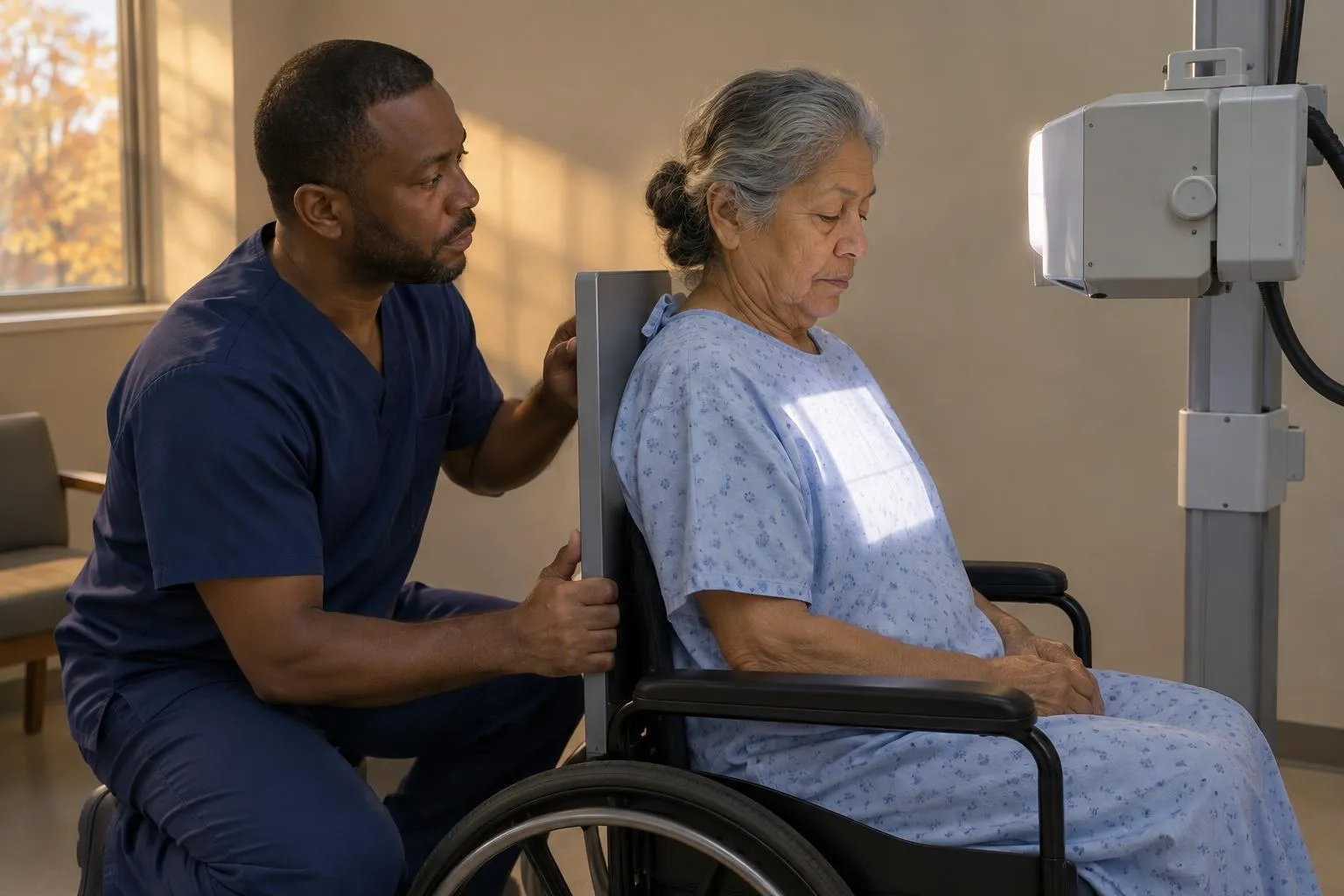
Are Cheap Mobile X-ray Services Worth It? The Real Cost of Cutting Corners
Cheap mobile X-ray service saves $18 a visit — until one unreadable chest film sends your patient to the ER. Here's what quality actually costs.
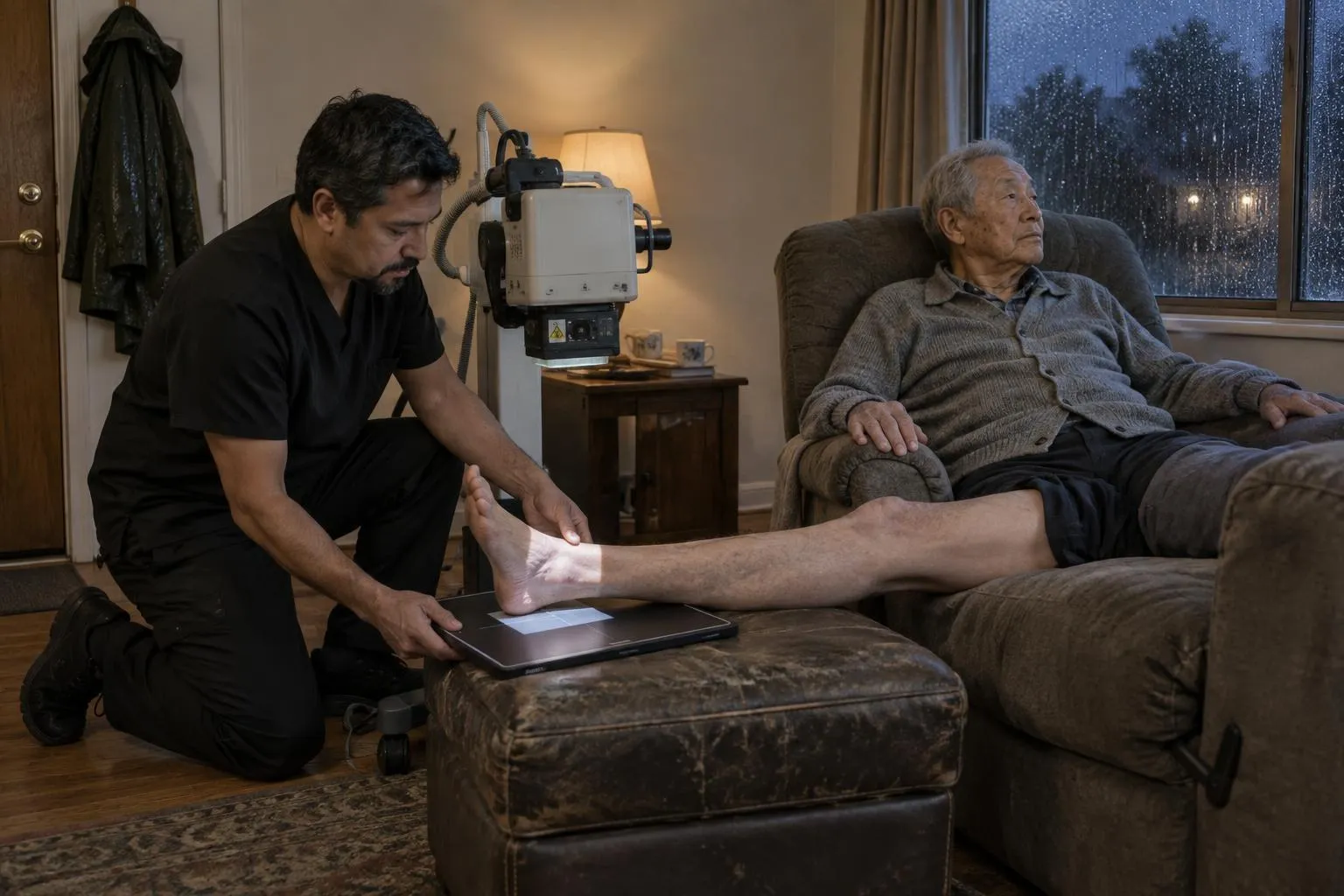
How Much Does a Mobile X-ray Service Cost? (2026 Pricing Guide)
Mobile X-ray service costs $75–$200 per study vs. $500–$3,300 at a hospital — a breakdown of equipment, teleradiology, and after-hours pricing for SNFs and…
Looking for more? Browse our full resource library or find mobile X-ray services in other cities.